Skip to content


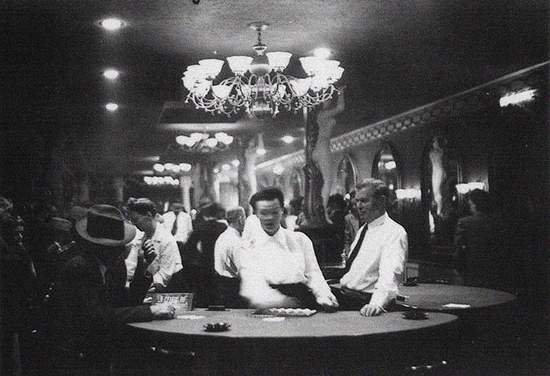
Reno Casino. 1944. Photo by Herb Ringer.

renoblackjack

Posted in Uncategorized.

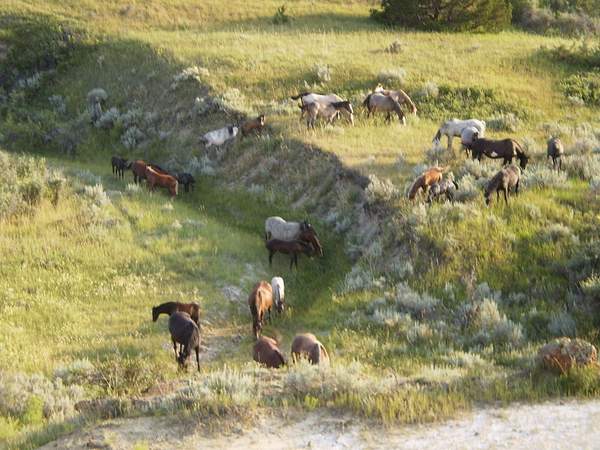
(From the August/September Zephyr) Teddy Roosevelt and Carl Jung: Rendezvous Out in the Badlands…By Scott Thompson

An excerpt:

On Valentine’s Day, 1884, when he was in his mid-20s, Theodore Roosevelt’s mother and wife both died. In his grief he sought refuge on a cattle ranch in western North Dakota that he had invested in the year before. To comprehend the depth of the place’s remoteness when he was there we have to think of vast stretches in Alaska or Nunavut in far northern Canada. And he could not have had a more improbable background for such an adventure, being Harvard educated and from a wealthy New York family. Yet to his enormous credit he dug in and stayed out on that strange land for much of the next three years.

And in the process he lost over half of his sizeable investment in the ranch due to the terrible weather for cattle. In spite of that, being out on that landscape changed him: “I have always said I would not have been President had it not been for my experience in North Dakota…It was here that the romance of my life began.”

To read more of Scott’s article, click the image below:

800px-Wild_Horses_In_Theodore_Roosevelt_National_Parkhttp://www.canyoncountryzephyr.com/2014/08/03/teddy-roosevelt-and-carl-jung-rendezvous-out-in-the-badlands-by-scott-thompson/

Posted in Uncategorized.

(From the August/September Zephyr) Vlachos’ Views…Photos and Captions by Paul Vlachos

Click the image to see more of Paul Vlachos’ incredible photography:

1http://www.canyoncountryzephyr.com/2014/08/03/vlachos-views-photos-and-captions-by-paul-vlachos-13/

Posted in Uncategorized.

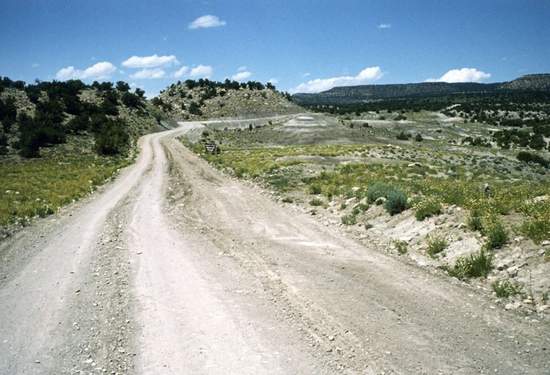
BEFORE THE ASPHALT… The La Sal Loop Road. June 1978

beforelasalloop

Posted in Uncategorized.

(From the Z Archives) ” I Really Loathe this Town:” An Interview with Tori Woodard and Patrick Diehl…by Erica Walz

An excerpt:


Erica: What about people who enjoy it the way it is?

Patrick: I can’t imagine enjoying it. I really loathe this town, and you can quote me. Socially it’s a really loathesome place. You can put that in the paper. Absolutely. It’s the worst place I’ve ever lived, and I’ve lived quite a few places. So some people like it–it’s like there’s no accounting for taste. But I didn’t move here because I wanted to live in a small town like this. I moved here for Tori.


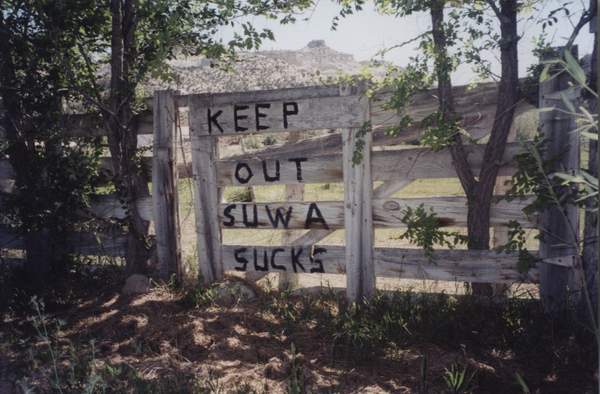
To read more of Erica’s interview, click the image below:

suwasucks

http://www.canyoncountryzephyr.com/2014/08/03/from-the-zephyr-archives-i-really-loathe-this-town-an-interview-with-tori-woodard-and-patrick-diehl-by-erica-walz/

Posted in Uncategorized.

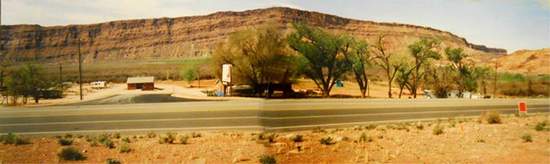
A Panoramic view of the junction of US 191 and Utah Highway 128. From 1989

191n128

Posted in Uncategorized.

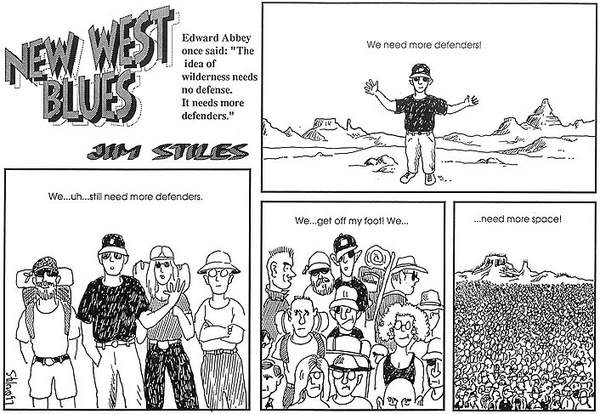
(From the August/September Zephyr) The Zephyr Wilderness Plan, updated and revised…by Jim Stiles

An excerpt:

For decades, since the Wilderness Act was passed by Congress in 1964, citizens of this nation have waged war with each other over the need for wilderness and the size of the wilderness we need. The differences of opinion are staggering, the area of disagreement as wide as the Grand Canyon. Consider the views of Earth First! and the Western Association of Land Users (WALU.) The radical environmental group (so called) once proposed a 16,000,000 acre reserve for southern Utah which would turn our end of the state into one vast roadless area—Southern Utah before the uranium boom.

To read more of Jim’s article, click the image below:

nwb-aug-sept-2000

http://www.canyoncountryzephyr.com/2014/08/03/the-zephyr-wilderness-plan-updated-and-revised-by-jim-stiles/

Posted in Uncategorized.

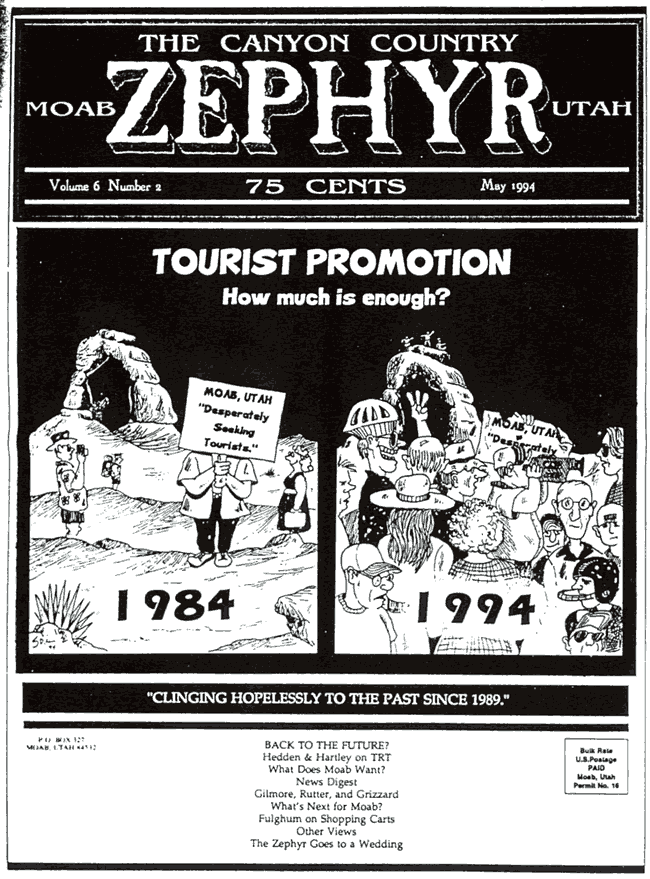
(From the August/September Zephyr) Zephyr Chronicles #3: THE FORK IN THE WILDERNESS ROAD & ‘TIME TO LOOK IN THE MIRROR’…by Jim Stiles

An excerpt:

I always loved wild, open country, from the time I was a kid. I spent much of my youth on a canoe or lost in some forest. It’s why I came West.  In 1982, I heard about a new grassroots group called The Southern Utah Wilderness Alliance, I signed right up. Later I briefly became a board member. The idea of “saving the West’ via my involvement in environmental organizations seemed like a good idea to me and in those early years, we were all driven by the same motivations.Going back to 1989, I stated my own reasons why I valued wilderness. In the November issue of The Zephyr, I wrote:

“The concept of wilderness is most troubling to many because it is a radical departure from the traditional American ethic of work and utility. We have been taught that everything has a utilitarian function and if it can’t be used for something, it has no value. But the fact is, more Americans do see a value and are willing to make a sacrifice to see that those wild places are preserved. Whether they get to explore them is irrelevant. And it doesn’t matter if the creation of wilderness areas produces economic benefits to nearby communities, because that is NOT why they were created.”

To read more of Jim’s article, click the image below:
cover-may94http://www.canyoncountryzephyr.com/2014/08/03/zephyr-chronicles-3-the-fork-in-the-wilderness-road-time-to-look-in-the-mirror-by-jim-stiles/
Posted in Uncategorized.

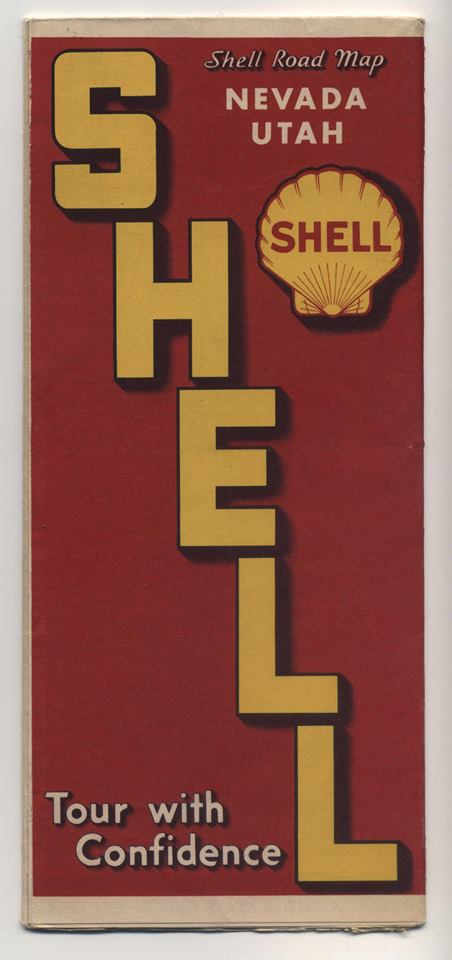
The 1934 SHELL OIL MAP of UTAH

http://www.canyoncountryzephyr.com/2011/10/02/clinging-hopelessly-to-the-maps-shell-highway-map-1934/ (click the link to view…then enlarge)

shell

Posted in Uncategorized.

(From the August/September Zephyr) Take it or Leave it: Book Cliffs Highway Update & Some Thoughts on “Production v Consumption…by Jim Stiles

An excerpt:

Four months ago,  the Grand County Council presented a proposal to build an “energy transportation corridor” via Sego Canyon, through the Book Cliffs, to possible oil development sites in the northern tip of Grand County. The plan included the creation of a paved highway, for energy transportation and tourism, that would have linked Vernal, Utah with I-70 and other recreation destinations in southeast Utah.  It also proposed a corridor for energy pipelines.

Sego Canyon is narrow, isolated, and undeveloped, accessible only by an unimproved dirt road. It ends at the Ute Indian reservation boundary. A gate was constructed by the Utes in the mid-80s and the completion of the proposed transportation corridor would require the construction of at least ten miles of new road, through some of the most rugged terrain in the American West.

To read more of Jim’s article, click the image below:

Posted in Uncategorized.