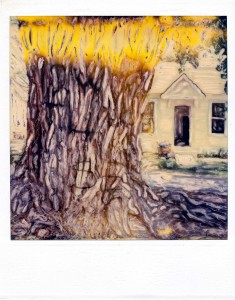
Click the image below to see more of Terry’s “Instant Moab” polaroids:
The Canyon Country Zephyr Blog
Click the image below to see more of Terry’s “Instant Moab” polaroids:
Posted in Uncategorized.
rev="post-9759" No comments
– October 5, 2013
http://www.youtube.com/watch?v=Ju592YYJFjI
Posted in Uncategorized.
rev="post-9830" No comments
– October 5, 2013
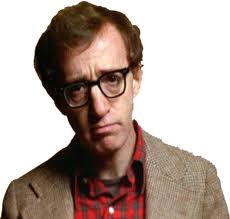 “More than any other time in our history, mankind faces a crossroads. One road leads to despair and utter hopelessness. The other, to total extinction. Let us pray we have the wisdom to choose correctly.”
Woody Allen
Posted in Uncategorized.
rev="post-5926" No comments
– October 5, 2013
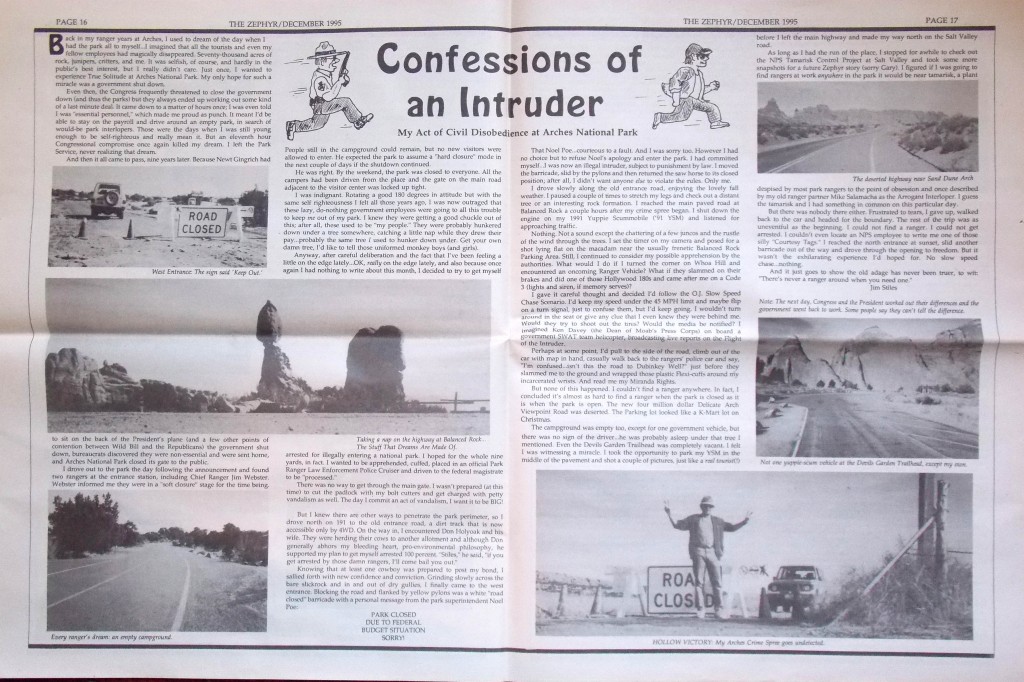
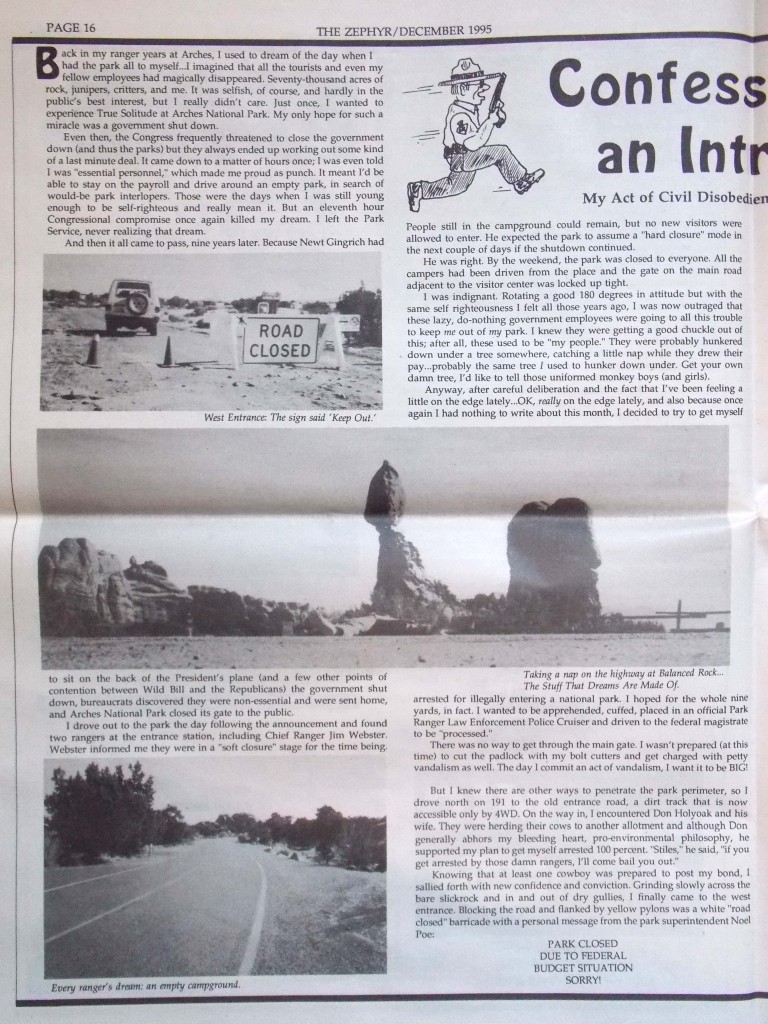
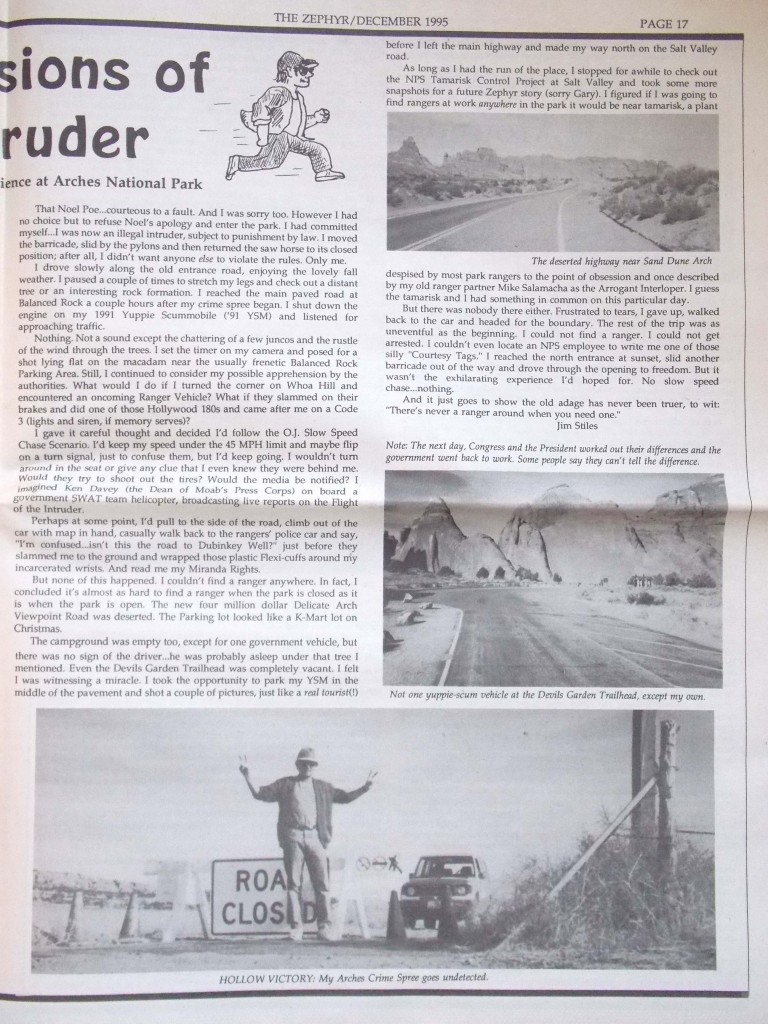
DEJA VU! (from the December 1995 Zephyr)
The Zephyr remembers the 1995 federal Shutdown and the editor’s illegal foray into Arches National Park…
Posted in Uncategorized.
rev="post-10023" No comments
– October 4, 2013
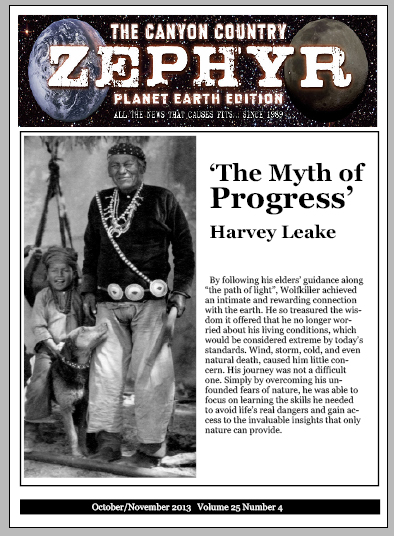
Click the cover to go to our main page.
Posted in Uncategorized.
rev="post-9662" No comments
– October 1, 2013
Readers of the Zephyr are not unfamiliar with the angst that its writers often express over the deteriorating state of our natural environment and the ineffectiveness of our best efforts to reverse the trend. Attempts to correct the problem by fighting development or choking off the extraction of natural resources have proven to be ineffective, because the all-powerful industrial/commercial machine that feeds the insatiable appetite of human desire always finds a way to sustain itself. What the environmental activists rarely confront is the underlying psychology that drives this system. Simply put, it is our addiction to artificiality resulting from our compulsion to create the feeling that we have escaped from nature. Comfortable, non-natural surroundings, furnished with an ample supply of gratuitous, man-made objects, create in us the pleasurable, but tenuous, feeling that we have successfully transcended nature.
To secure the myth and prevent the light of reality from dawning on us, we bombard our senses with an endless array of unnatural stimulants. The irony of the situation is that most of the proponents of environmentalism seem to be no less enamored by artificiality than the rest of society, as evidenced by their lifestyles and deepest aspirations.
Although humans have taken a certain pleasure in artificial things since time immemorial, it was not until after the Civil War that our society fully embraced artificiality as the Great American Dream. The essence of this philosophical choice was best expressed by the celebrated Colorado River explorer, John Wesley Powell, who declared that success comes “not by adaptation to environment, but by the creation of an artificial environment.” He dismissed the ancient practice of adaptation to nature, as practiced by Native Americans and other minority cultures, as being primitive and archaic.
The fulcrum of the societal paradigm shift was the 1893 World’s Columbian Exposition in Chicago, which overtly promoted the theme of “progress”. Not intended merely for entertainment, the fair was “a propaganda of social ideas,” according to one of its architects. The glamorous, but flimsy, buildings that comprised the “Great White City” housed the fanciest examples of artistic and technological endeavor that humankind had to offer. Exposure to these items, it was hoped, would arouse the populous “from the apathy of a dull and colorless existence by any object lesson in the higher regions of human effort.” Older cultures, such as those of the Native Americans, were represented at the fair, but only to illustrate how far modern civilization had progressed from its primitive past.
The possibility that this shift in focus from the natural to the artificial would create a profound loss of wisdom seemed not to have crossed the minds of the social reformers of the day. A few Americans disagreed with the new approach, but they had no public voice in the matter.
One man who knew better was a humble Navajo shepherd named Wolfkiller who lived in the rugged country of southeastern Utah. My great grandparents, Louisa and John Wetherill, first met him in 1906 at the isolated outpost of Oljato, near Monument Valley, where they moved to start a trading post. From all outward appearance, he was just a simple herdsman—curiously comfortable with his primitive way of life but unsophisticated in the ways of the world outside of his little section of the Utah desert. The Wetherills soon recognized that he was a unique personality who had a rare understanding of life.
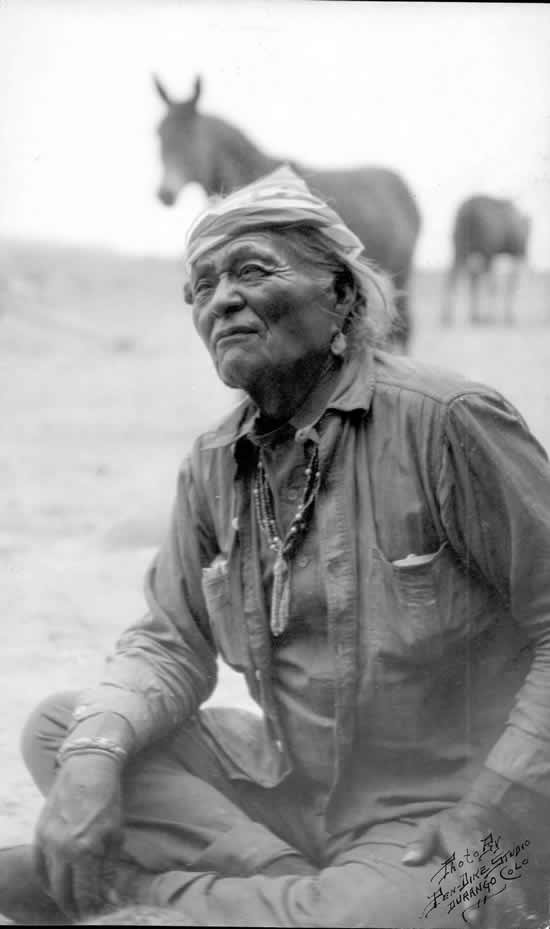
Years earlier, Wolfkiller’s grandfather and mother had taught him how to follow the “path of light” by studying nature and to adapting his feelings to its ways. Wolfkiller recounted to my great grandmother the lessons of his youth and how they helped him through later times of adversity. Louisa translated and recorded his stories, which they both hoped to preserve for the benefit of future generations. Several years ago I ran across the manuscript in the family archives. It was finally published in 2007 under the title, Wolfkiller: Wisdom from a Nineteenth Century Navajo Shepherd (Gibbs Smith Publishers).
Wolfkiller received his first lesson in the wisdom of nature in the early 1860s when he was about six years old. His grandfather overheard him complaining about the icy wind and gently explained that it was something to be thankful for. “All things are beautiful and full of interest if you observe them closely and study them,” the grandfather admonished. After considering this advice for a few days, Wolfkiller came to see that the wind is good. “We had thought the wind was just a useless thing to cause us unhappiness, but now we saw that it had many purposes. It cleared the air of the odors of decaying plants and dead animals, brought the clouds on its wings to give us rain, and made us strong,” he concluded.
When a violent rain and lightning storm terrified the young boy, his grandfather took him out to study the aftermath. “See how beautiful it really is,” said the grandfather. “How black the clouds are. See the streaks of white lightning coming down. See the rocks over which it has passed—how they glisten. And you can see how fresh and green the cornfields, grass, and trees are now. We needed the storm to make things beautiful.”
When winter came again, Wolfkiller’s mother asked him to go outside and roll in the snow. “The snow will be with us for several moons now, and if you roll in it and treat it as a friend, it will not seem nearly as cold to you,” she explained.
Wolfkiller’s elders were not mere fair-weather lovers of nature. They relished their intimate connection with the earth and valued the wisdom it offered so highly that their harsh living conditions seem trivial to them. Wind, cold, storm, and even natural death, caused them little concern. Wolfkiller learned that nature is not evil, but people sometimes respond to it in evil ways.
To those who have learned the ancient skill of adaptation, extreme environmental conditions can cause some discomfort, but they are rarely life threatening. The threat that they pose to America’s citified masses seems to be more psychological than physical. We have lost both the will and the strength to thrive under harsh conditions, because we have made a practice of molding nature to suit our whims rather than adapting our desires to nature’s ways. On a deeper level, our fanatical pursuit of comfort amounts to a futile endeavor to transcend nature, and it only drives us to ever-increasing levels of self-deceit.
America’s quest for the artificial has led to the creation of a monster social, commercial, and industrial system that feeds upon itself and takes its due toll on the health of the earth, as well as on the souls of its adherents. We cherish technological innovations that serve no other purpose than to further distance us from nature. We idolize and envy the wealthy and glamorous because they have been the most successful at creating their own unnatural realms. Charity is helping others avoid nature. Many people now spend their entire lives with little exposure to nature at all. This obsession is so universally accepted by our society that we find it difficult to consider that an alternative even exists.
From ancient times, contemplative people have looked to nature for essential insights about life. The scriptures are full of proverbs and parables of those who were keen observers of nature and understood the deeper implications of their experiences. One such lesson is that a profound problem cannot be solved superficially—it must be attacked at its root. The ills of the environment will never be cured by those who are themselves dedicated to the pursuit of artificiality and lack the wisdom to see the dichotomy between that goal and their wishes for the health of the earth.
Posted in Uncategorized.
rev="post-9636" No comments
– October 1, 2013
Posted in Uncategorized.
rev="post-7762" No comments
– September 29, 2013
 (From the 2003 archives)
With most of the peoples of the world angry at each other, and as we sit on the brink of yet another war, is it any wonder that a sense of hopelessness and despair permeates the battered spirit of any human who takes the time to actually think about our dilemma? Nothing ever seems to get better. We just run the cycle, over and over. Recently I picked up a copy of LIFE magazine and turned to its table of contents. The editorial for that issue was titled: “Palestine–Will we ever find a solution?” The story recounted recent acts of senseless violence and wondered if political manueverings on both sides could ever result in a peaceful outcome. A few pages later, a reviewer criticized the inane and violent aspects of recent media fare. Have we reached rock-bottom when it comes to bad taste and displays of physical horror, the writer asked.
The answer to both questions was–NO. I was reading a LIFE magazine from 1948. A half century later, resolving the “Palestine Problem” is just as elusive, the violence more intense than ever. In the media, beautiful young women are eating horses’ rectums on national television (“Fear Factor,” NBC) and depictions of violent behavior have never been more graphic or disgusting.
So is there any place on this planet that offers hope? Is there any tiny corner of our Earth where resolution comes easy, where our differences are set aside? Where we are all equal in each other’s eyes? My friends…there is such a place and it was right under our noses…
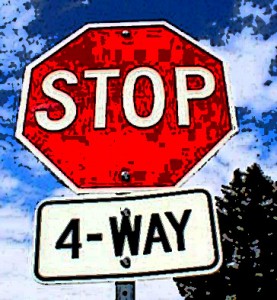
The four-way stop.
It is truly a vortex of civility in a world-gone-mad. Total strangers, who could be savage adversaries in another venue, come together at a four-way stop and resolve what could otherwise be chaotic confusion. It doesn’t matter if the other three participants in this Great Experiment are of a different race, or political persuasion, or sexual orientation. It doesn’t matter what kind of car they’re driving or what their economic background is. We are not only all equal at a four-way, we are incredibly and consistently respectful of each other. We know how the four-way stop works and we live by that creed of civility.
So even Al Gore would yield to Ralph Nader at a four-way in Tallahassee. Rush Limbaugh and Al Franken can find resolution there. Al Sharpton and Trent Lott. Dr. Laura and Madonna. George W. Bush and Saddam Hussein…
Perhaps that’s stretching it a bit.
Of course there is that occasional deviant, who fails to abide by the rule, who takes someone else’s turn in the rotation, but even that aberrant behavior has a bonding effect on the others. When that rare event occurs and a violation of the code is observed, note the all-knowing glances that the other drivers give to each other. “That poor fool,” their eyes say to each other in quiet nods and gestures. “He is not a member of the House of Civility.” But even then, they forgive him and go on.
We humans may quarrel endlessly and kill each other and lay waste to the planet and show utter disregard for everything worthy of respect. But if you ever despair to the point of giving up hope, get in your car and find the nearest four-way stop and rejuvenate your spirit. It’s the place where we all can just get along.
Posted in Uncategorized.
rev="post-2996" 211 comments
– September 28, 2013
I’ve always considered myself a conservationist, but I’m not sure my reasons for conserving have been as lofty or high-minded as the likes of many affluent mainstream environmentalists. I’ve conserved out of necessity more than any politically-driven agenda. I don’t conserve to be hip; I conserve because I can’t afford to do otherwise. I have determined to live modestly and conservatively so I can still screw off and be lazy, as is my preference.

I live in a small house because it’s easy to maintain. I can vacuum the cat hair in ten minutes. It’s economical to heat in the winter and easy to cool in the summer. I live alone and don’t use much water because I have better things to do than worry about my lawn. I go to the laundromat once a month, whether I need to or not. I flush every third time on average, because I forget to flush the other two times. And no, I don’t put the seat down, which has nothing to do with energy conservation but is an enlightening aside and a warning to any woman out there who wants to make toilet seat positioning an issue, political or otherwise.
Lately I’ve been having some thoughts on conservation, however, that most of you will find shocking, even heretical. Recently I scanned the headlines, searching for conservation stories and what I discovered was noteworthy. In almost every instance, proposed water and energy conservation measures were always linked to future population growth.
In Tucson, Arizona, for example, a report noted that, “the population to be served by Tucson Water is projected to increase from 638,936 in 2000 to about 1.2 million in 2030 and 1.3 million in 2050.” It determined that massive conservation efforts must be initiated soon, in order to deal with the population explosion that is already underway.
In Utah, the story is the same; our population is expected to double by 2020. The Utah Rivers Council notes that, “the State of Utah Division of Water Resources plans on meeting future water needs for Utah through a combination of water conservation and development of new water sources.” URC proposed “meeting future water needs by raising the water conservation goal to 30%, a 5% increase over the current goal, combined with other creative approaches such as water reuse and agricultural water transfers as a more cost-effective approach to meeting future water needs.”
So what is the broader, more long term purpose of conservation? Clearly, it’s not so we can somehow bring this consumptive madness to a halt and get back to our simpler roots. And it’s definitely not so we can have more time to goof off. No indeed. According to all these studies and warnings, our duty to conserve is based on the absurd notion that we have some obligation to maintain a future population almost double what it is now.
We’re conserving in 2007 so that we can help assure the very nightmarish future we fear the most—a nation and a planet so overpopulated as to eventually assure its destruction.
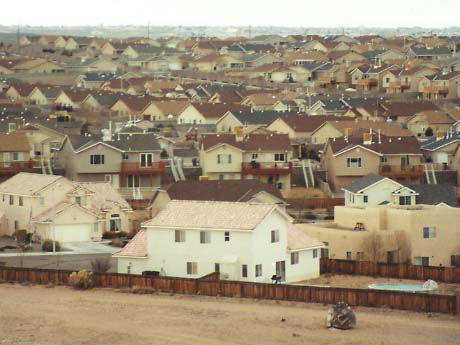
Consider these observations on population by former Senator Gaylord Nelson, the founder of Earth Day, in a landmark 1997 essay,
What Will Happen to Wildlife Habitat?
Population growth has already destroyed half the nation’s wetlands and the major portion of habitat for birds and other animals. There is something wrong with a society which remains complacent while this kind of irrational destruction erodes its life-sustaining resource base. With twice the current population, will there be left any wilderness areas, remote and quiet places, and habitat for songbirds, waterfowl and other wild creatures? Certainly not very much.
New Cities, Suburbs, Housing Developments:
At the rate of urbanization since 1977, the urbanized area of the United States will double by about 2050 from 155,000 square miles to about 312,000. This is an area larger than Wisconsin, Iowa, Illinois, Indiana, Ohio and Michigan combined. If we permit that to happen, what will our country look like and be like?
National Parks, National Forests, Wildlife Refuges, BLM Lands and Wilderness Areas:
With twice the population, what will happen to the last of our great natural areas which are already experiencing serious degradation from population pressures? The short answer is, they will be gone–rare and special places like our national parks and national forests will evolve into modified theme parks and Disneylands–the process is already underway.
Despite water and energy conservation efforts, population growth will still cause urban, suburban and exurban sprawl. Turning down your sprinklers ultimately only assures more lawns. Cranking down the thermostat only guarantees more air conditioners. Does anyone out there in the environmental community advocate smaller homes? Or fewer gadgets? Of course not. How could they? Environmental groups are funded by some of the most consumptive billionaires on the planet.
Take a drive past the Moab hospital to see David Bonderman’s latest 15000 square foot mansion. Bonderman, one of the most successful corporate raiders in the world, also sits on numerous environmental boards and has been called “the greatest conservationist in America today,” by one of his donor recipients, the Grand Canyon Trust.
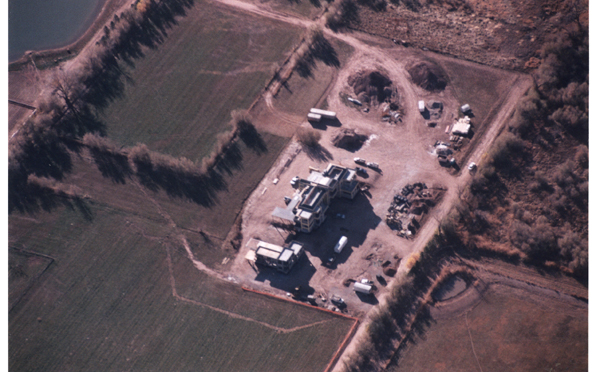
As sprawl consumes more habitat, what chance does wildlife have by the end of the century, if population growth is left unchecked?
As the demand for controlled adventure recreation grows, as a population so disconnected from its natural past, yearns for distractions, ‘theme park Disneylands” will continue to proliferate across the country.
And so..we’re supposed to CONSERVE, so all this can come to pass?
Are we insane?
If we truly want a better future for our grandchildren, is this the path to take? If I thought Bonderman’s greedy habits and those of his pals were intended to bring all this madness to a precipitous end, I could almost admire them. Maybe that’s why the Grand Canyon Trust gushes such praise. Somehow though, I doubt it.
Instead, even the allegedly most enlightened among us, the leaders of the environmental movement, continue to convince us that we can save the planet by using energy efficient shower heads and buying a Prius.

The Feb/March Issue will be posted on February 1:
Posted in Uncategorized.
rev="post-2498" No comments
– September 27, 2013
Posted in Uncategorized.
rev="post-7752" No comments
– September 25, 2013