Skip to content


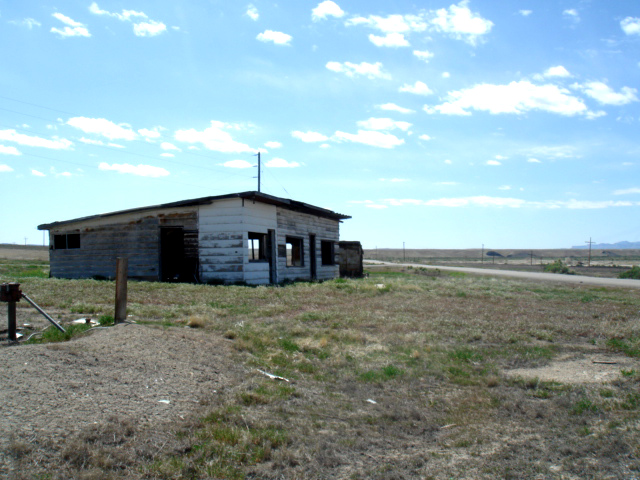
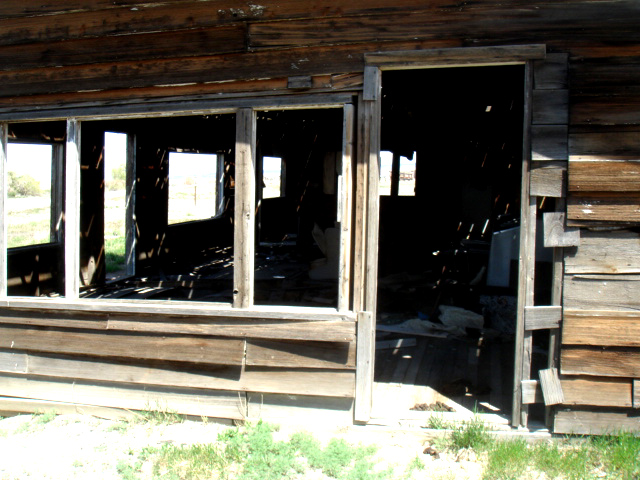
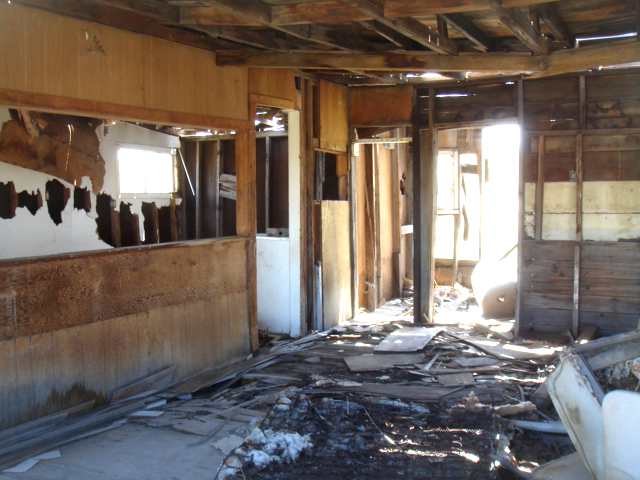
Poking Through the Ruins #7 ‘ETHELS’ CAFE’ in CISCO, UTAH’

From The Zephyr Archives:
In the mid-70s, Cisco, Utah was already being called a ghost town. It had boomed briefly during the Uranium Craze, but the town looked deserted by the early 70s.
One marginal exception was Ethel’s Cafe. Its owner was known for her cranky disposition and I was told once that if I ever felt as if I needed more abuse than what was being served to me, I should pay Ethel a visit.
Being the masochist that I am, I immediately headed north, up the river road to see Ethel. It was early spring and still blustery and cold. I found Ethel behind the counter, a cigarette dangling from the edge of her mouth. She had one customer, who seemed to have permission to be there, but they both cast a scornful eye at me when I asked if I could get a Coca-Cola.
“They’re in the freezer case,” she snarled. “Get it yourself.”
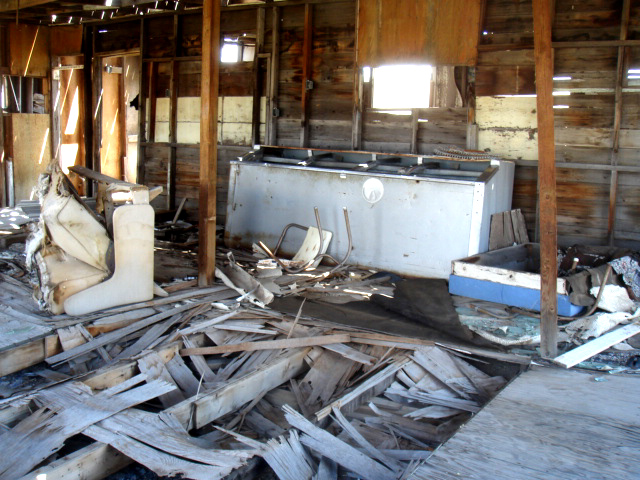
I pulled a bottle from the fridge but it didn’t feel very cold. Because I have had a death wish for decades, I asked, “Do you think I could have a glass with some ice?”
“What the hell for? You just took it out of the FREEZER!”
I paid for my Coke and left. Feeling supremely abused, I sa­vored my luke warm soft drink, all the way back to Moab.
~JS
The actual freezer case from which I extracted my tepid cola…
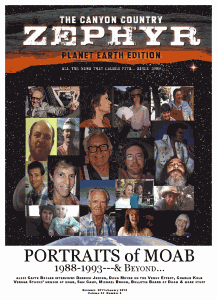
The Dec/Jan Zephyr is ONLINE (click the cover)

Posted in Uncategorized.

Tagged with , , , .


(YouTube) ‘Jeremiah and Del Gue Part Ways’

http://www.youtube.com/watch?v=MCYfdMwPBi0

Posted in Uncategorized.


WHAT A WIND FARM LOOKS LIKE AT NIGHT

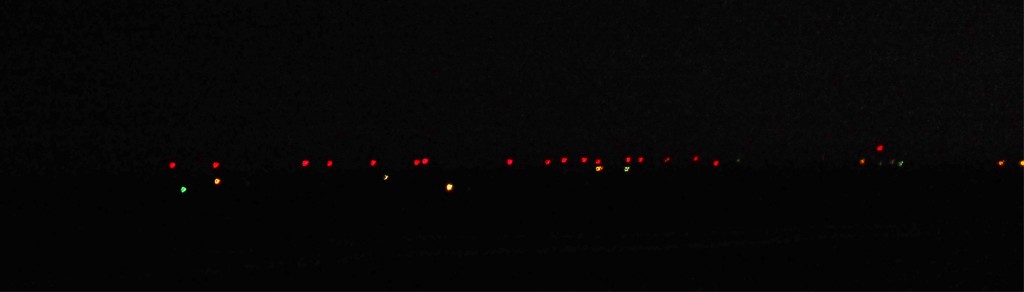
As industrial scale wind farms become more prevalent, the night skies across this country are going to change significantly. Recently a plan to build such a wind farm just north of Monticello, Utah has caused some controversy, mostly from nearby residents. What hasn’t been stated is their visual effect at greater distances. Here is what a small wind farm (about 20 turbines) looks like at night, from a distance of 25 miles.

CLICK IMAGE TO ENLARGE

These lights will be visible for scores of miles, perhaps as far as a hundred miles, particularly to the east. This is the kind of view visitors to Mesa Verde National Park can expect when they look west at night. Do aesthetics matter? Janet Ross, a Monticello resident and an advocate of the project said, “…I think for aesthetics, for safety, for noise, it needs to be a little further away. And that’s what town people are concerned about too.”

If aesthetics matter, there’s more to be concerned about than that.  I hope environmentalists scrutinize these kinds of visual impacts in the same way they look at other kinds of visual degradations….JS

Posted in Uncategorized.


POKING THROUGH THE RUINS #17— Abbey’s Old Trailer? And the Wooden Caboose in the Yellow Cat

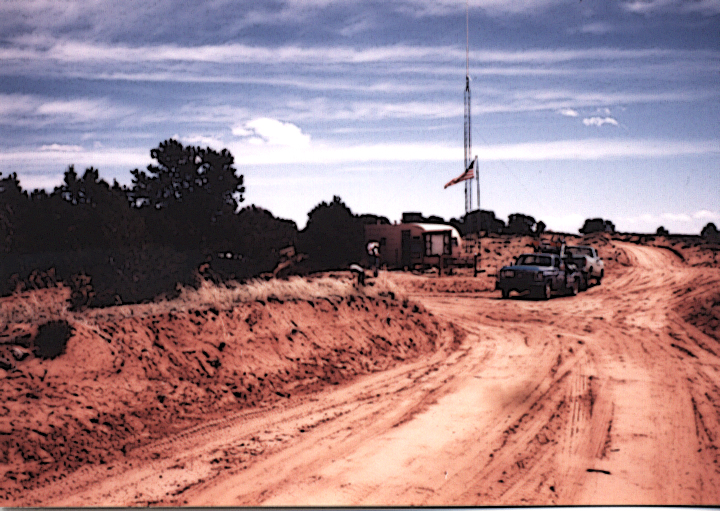
For years the official ‘visitor center’ at the Maze District of Canyonlands National Park was this tiny trailer at Hans Flat, about 40 miles down a dirt road from Utah State Highway 24.  There were always rumors in the late 70s that this was, in fact, THE trailer that Ed Abbey inhabited at Arches NP in the 1950s. In fact, Abbey’s trailer sat in the Canyonlands ‘bone yard,’ (its junk area) for years and was finally sold for scrap to Mesa County, Colorado. They wanted the axles.

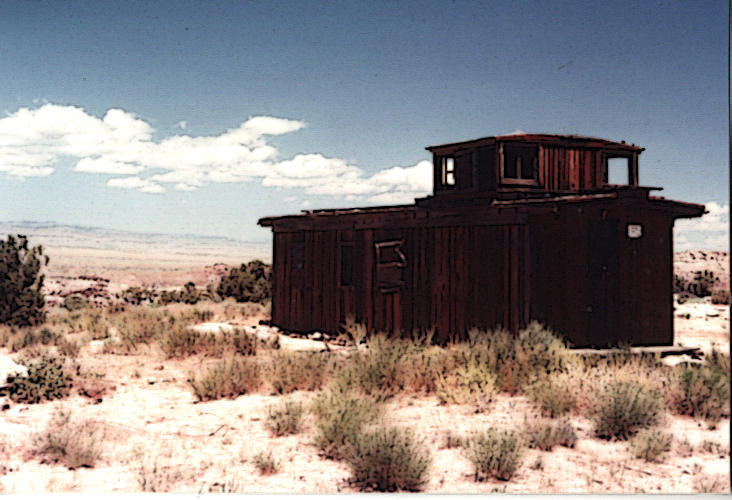
This old wooden caboose sat all by itself on an empty stretch of desert north of Arches, in the old Yellowcat mining district. You could still read the old “D&RGW” logo (Denver and Rio Grande Western) on its flank. How it got there or how it suddenly disappeared remain a mystery…JS


The Feb/Mar Z: click the cover:

Posted in Uncategorized.


Willie Flocko’s Country Kitchen– ‘In the 60s the Best Place to Eat was Porcupine Ranch’..By Bill Benge

(From the 2003 Zephyr Archives)

In the 1960s and into the early 70s, an island of civility, culture, beauty and
joie de vivre flourished in the upper reaches of Castle Valley—a veritable
Camelot known as Porcupine Ranch. This paradise was owned and operated
by Ray and Ethel Scovill.

Ethel was a formally educated scholar who had attended the University of
California, Berkeley and the Sorbonne in Paris. Ray was self-educated, more
or less (mostly more) and had a colorful and distinguished past. Among the
many hats he wore, Ray had been a professional hockey player, the owner of
an import/export firm, a Moab City Policeman, and the Moab Justice of the
Peace.

While he was a JP, Ray also ran a restaurant, located near the alley, behind
what is now the Back of Beyond Books. Ray could dispense justice all day, and
dispense steaks and fries all evening with the same aplomb. When the Scovills
retired and moved to Porcupine Ranch, they operated a “restaurant” of sorts,
partly to offset expenses and partly due to their love of interesting people and
eclectic conversation.
Attendance at the “restaurant” was, by and large, by invitation only or, if
they were lucky, prospective diners could call and request a reservation. If they
were really lucky. Generally, one needed a “recommend” from someone within
the Scovills’ Inner Circle of Porcupine patrons.

Ray was always very blunt with potential customers; if they weren’t on the
recommend list he told them. And if he simply wasn’t in the mood to serve, he
didn’t. It was that simple.

Whenever there was a film being shot in the area, the actors and crew could
often be found dining at the ranch. Customers included John Wayne (who Ray
liked), Betty Davis (who Ray also liked) and Terrence Stamp (who he despised).
It might be noted that Ray’s first impressions were usually irreversible
and required immediate action. If Ray Scovill didn’t like someone, they were
history. Immediately. Even before the meal had begun. A Ray Rejection was
ordered to leave the premises and a long walk that required a several mile trek
to the main Castle Valley road and an even longer journey back to Moab.
Dinners at Ray and Ethel’s were conducted in a “salon” atmosphere. One
might arrive at seven in the evening for cocktails. Discussions on any subject
might follow and go on for hours. Sometimes the topic might be 18th Century
French literature. Or it could be modern detective fiction. Or contemporary
politics. Or new wines from California. Dinner was served at Ray’s whim,
when he was good and ready, generally between ten and eleven, like it or not.
Dinner was served family-style at long tables and, with few exceptions, was
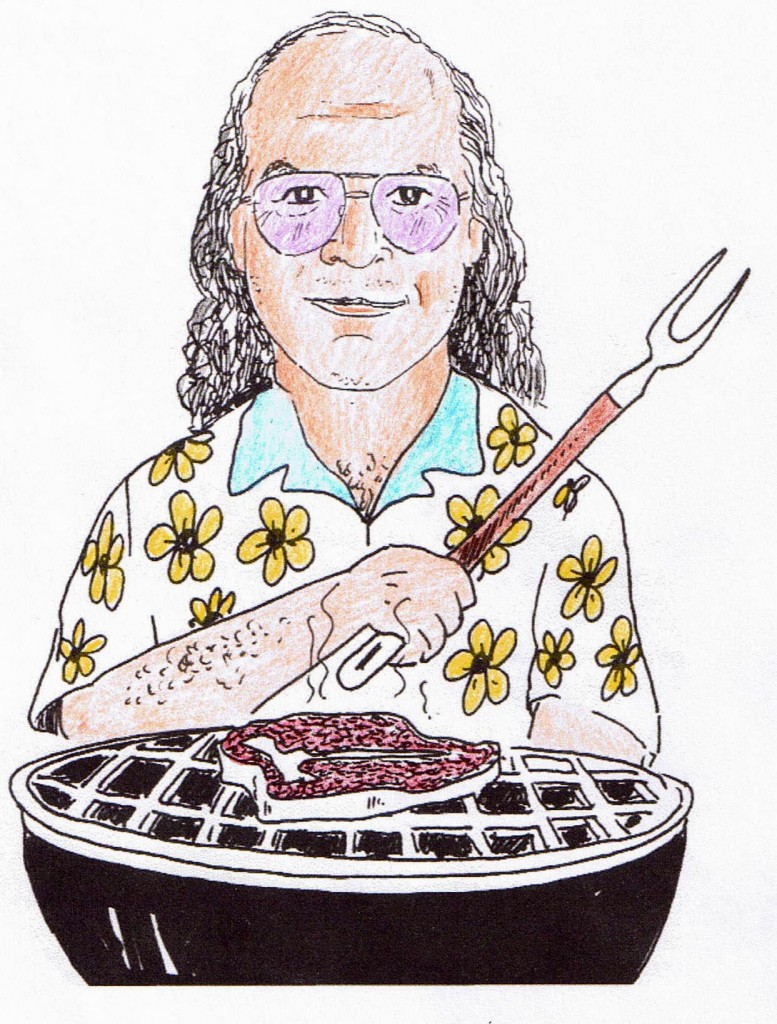
always the same. It started with French Onion Soup (Ray’s secret recipe), a
huge salad with Ray’s secret and patented salad dressing, followed by huge
two or three-inch sirloin steaks, served on a platter from which customers
would cut pieces to fit their appetite, and twice-fried French potatoes so that
they would puff up like a true French souffles potato.

Dessert was usually Bavarian Cream. On special occasions like birthdays,
Thanksgiving, Christmas, or Easter, Ray would prepare dishes beyond his
usual bill of fare. One of the best of his special dishes was Deviled Crab. This
recipe, like the onion soup and the salad dressing, was a carefully guarded
secret (Ray had a lot of secrets). However, at the time of Ray’s death, the recipe
was passed along to a few of Ray’s closest friends. I was grateful to be on the
list. Inasmuch as Ray has been gone for almost 30 years, I feel it is proper to
release this recipe to the general public. Here it is:

RAY’S DEVILED CRAB
4 Tablespoons Butter
4 Tablespoons Flour
3 Cups Milk*
1 Pimento, finely chopped
2 Tablespoons chopped Green Pepper
1 Tablespoon chopped Parsley
1 Tablespoon sherry
1 Tablespoon Worcestershire Sauce
2 Teaspoons Dry Mustard
– Salt to taste
2 Cups canned, flaked Crab Meat
2 Hardboiled Eggs, chopped
– Grated Parmesan Cheese

Make a sauce of butter, flour and milk; add all remaining ingredients except cheese.
Turn into greased baking dishes (preferably greased scallop dishes) and sprinkle with cheese.
Bake in 375 degree oven for about 20 minutes.

* Ray always used condensed milk as it kept better, Porcupine Ranch being
an hour or more from Moab. Therefore I always use condensed milk for historical
reasons. Use one can of condensed milk and the remainder water to make 3
cups.

I hope that all of you will try this recipe and enjoy it, and for those of you
who knew Ray and Ethel, I hope this recipe will bring back fond memories.

For those of you who didn’t know the Scovills, I’m sorry that you missed two
wonderful people and a place and time that was magic.

This recipe is dedicated to Pam, Ross, Donna, Steve, Jim, Adrien, Sam, Barr,
Susan, Sylvia, Sal and all the rest of Ray’s “special family.”

Bill Benge died on October 20, 2006.

The Feb/Mar Zephyr is online (click the cover)
Posted in Uncategorized.


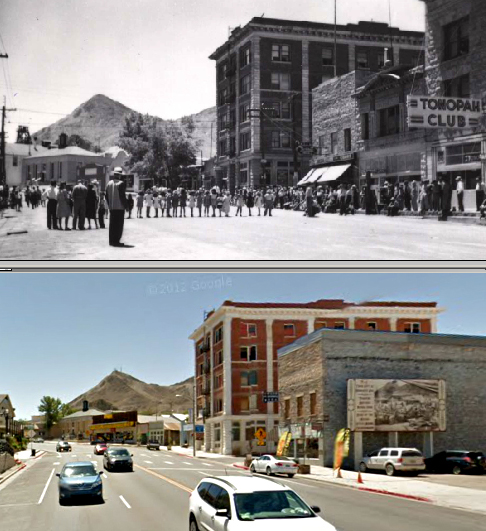
HERB RINGER…Then & Now–Tonopah, Nevada, 1944 & 2012 via Google images

herb-tonopah-then&now

Posted in Uncategorized.


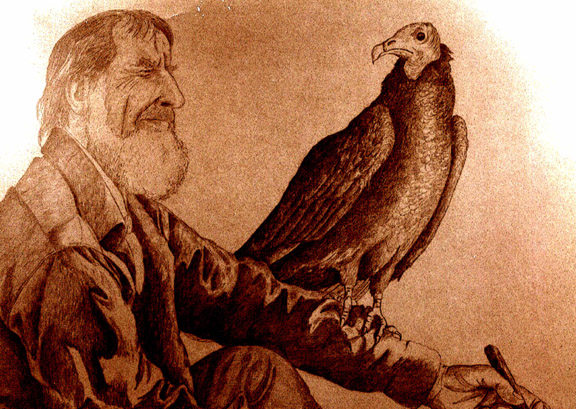
“ED ABBEY CONTEMPLATING REINCARNATION” by Stiles, 1988

Posted in Uncategorized.


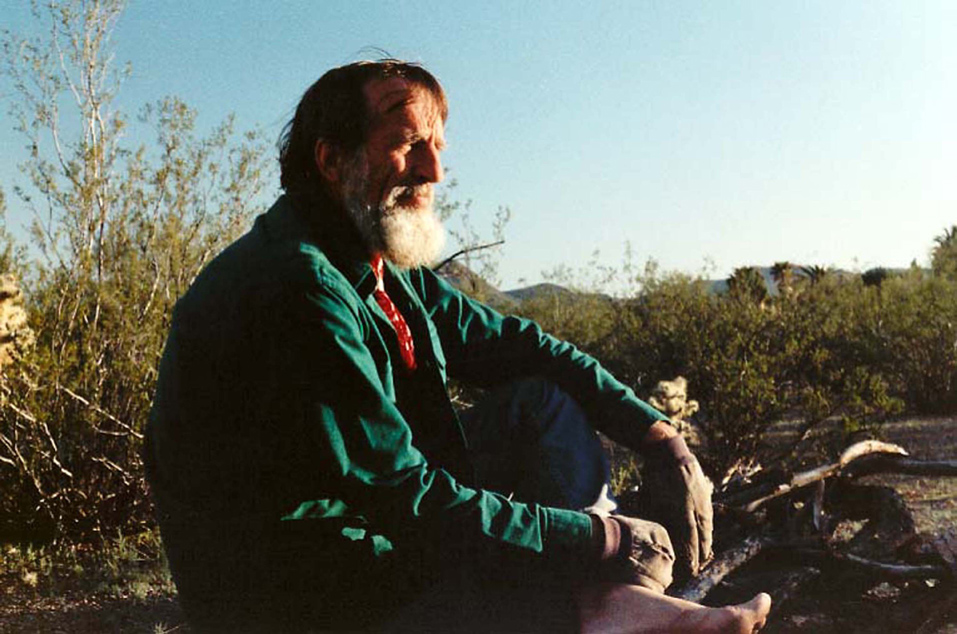
(April/May 2013) A 1982 Interview with Ed Abbey…by Eric Temple

Excerpt:

ET)  What do you see as the major environmental problem in Arizona right now?

EA)  Progress.  Development, Growth, Industry–everything that the politicians and the chamber of commerce loves, I’m against.  I think it’s gradually destroying Arizona, and I don’t think it will survive–I think we’re using up our resource base, especially water, much faster than it can ever be replaced.  Therefore, unless some sort of technological miracle saves us, I imagine that Phoenix and Tucson will be small towns again, and probably very nice places to live.

I was just reading a very good book by Charles Bowden, “Killing the Hidden Waters” which goes into this subject in great detail, historical and geological.  He describes how the Papago Indians survived out here simply by living off the land, mainly hunting and gathering.  Surviving on surface water–a few springs and flash floods for farming, and they got by for 10, maybe 20 thousand years.  ‘Course they didn’t create what most of us would consider a very brilliant civilization, but they had a satisfying way of life and were probably as happy as most modern Americans…

Click the image below to read the rest of Eric’s interview with Ed Abbey:

abbey2

http://www.canyoncountryzephyr.com/2013/04/01/an-interview-with-ed-abbey-by-eric-temple/


Posted in Uncategorized.


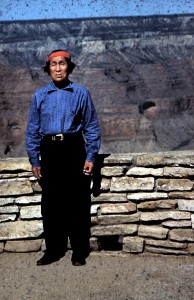
From the OCT/NOV Zephyr: Herb Ringer’s American West: Herb at the South Rim of the Grand Canyon, 1950

Click the image below to see more of Herb’s incredible photos of the Grand Canyon:

navajoatsouthrim


http://www.canyoncountryzephyr.com/2013/10/01/herb-ringers-american-west-herb-at-the-south-rim-of-the-grand-canyon-1950/

Posted in Uncategorized.


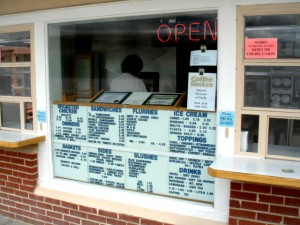
From the OCT/NOV Zephyr: Windows: Across America, Looking Out/Looking In…by Jim Stiles

Click the image below to see more of Jim’s “Windows”

WINDOW-CRAWFORD2


http://www.canyoncountryzephyr.com/2013/10/01/windows-across-america-looking-outlooking-in/


Posted in Uncategorized.