Skip to content


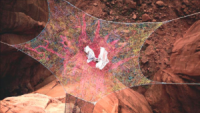
Aerial Photos of Arches National Monument #1 (from 1957)

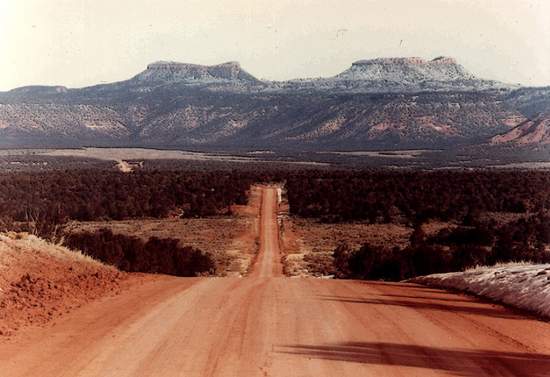
In 1957, as plans to construct a paved road into Arches National Monument proceeded,  a series of aerial photographs were taken.  According to former chief ranger Lloyd Pierson, he and superintendent Bates Wilson used these images to plot out the right-of-way for the new road. Later engineers refined the route. What the photographs show, more than anything else, is a very quiet, undisturbed national monument, when visitation barely exceeded 10,000. Within a few years of the road’s completion, visitation surged to 100,000. Today it hovers at close to one million…

Below….see if you can spot Delicate Arch.


The Dec/Jan Issue (click the cover)

Posted in Uncategorized.

‘ZOE’ The Human Kangaroo of Halsham Farm

AUSSIE FLASHBACKS #1….(From The Zephyr Archives…Feb/Mar 2009)
I’d heard about Zoe, but until I met her, I thought my buddy Greg was just pulling my leg. After all, “taking the piss” out of Yanks is an Aussie pastime.

Several years ago, I met Greg Fewson, a farmer from Western Australia, who lived as far out on the edge of the wheatbelt as anyone can, and still have any hope of finding enough rain to make something grow. The Fewson Family created Halsham Farm almost a century ago, and through good times and bad, they have persevered.

Greg grows wheat and raises sheep on several thousand acres that he rotates from year to year—sheep shit is excellent fertilizer for winter wheat. So the sheep and the wheat have a symbiotic relationship. Scattered across the vast Aussie landscape are, of course, the creatures for which Australia is best known. The ubiquitous kangaroos.

On our first drive to Halsham, 85 kms east of Katanning, Greg told me about Zoe.

Zoe the joey.

She had simply shown up one day and decided to stay; Zoe adopted the Fewson family. I could scarcely believe what Greg was telling me but she was so comfortable at Halsham Farm that she often came inside the house and stretched out on the couch in the lounge room—just one of the kids—her enormous hind legs and thick tail dangling over the far end of the sofa. At night she’d even sleep on the bed between Greg and his wife. And she loved whole wheat bread.
As Zoe grew, however, her visits became less frequent and one day, she left and didn’t come back.
Greg figured she’d found a mate and they’d never see her again. It was a logical assumption.

But two years later, in the middle of the night, and in the middle of nowhere—Halsham is miles from the nearest town—Greg was awakened by the sound of the sliding screen door in the lounge room. Before he could crawl out of bed and confront the intruder, he heard a hard thump on the mattress between him and his wife. He reached for the light switch.

It was Zoe.

Now full-grown but apparently unaware of it, Zoe had returned, even managing to unlatch the screen door in the process. She’d come to say hello, not to move back in. The next day she was gone again and sometimes Greg would go years without seeing her. She took a mate and produced a few joeys of her own, but managed to stay in the area.


Greg moved out of the house at Halsham and restored the old homestead, 20 kilometers north. The Halsham home sat empty for a few years until Greg heard I was looking for a place to settle for a few weeks. Gracious as always, he offered me the Halsham house…

“Everything’s turned on, Jim. Make yourself at home.”

A couple days later, I was hanging laundry on the clothes line in 100 degree heat when I saw something emerge from an old tattered and long abandoned trampoline, next to the house. I turned to see the blur of a roo coming right at me.

Scared me to death.

And then I thought….Zoe?

I spoke her name and she took two more hops and  turned her head just so, to allow maximum ear scratchability. She almost moaned like a dog.

I finally came back inside and Zoe slept in the shade. That evening I went for a walk along the fence line. Though I’m not a runner by nature, I decided to pick up the pace a bit, only to find Zoe hopping effortlessly beside me on the far side of the fence. The damn roo wasn’t even breaking a sweat.

Aggravated by my pace, she sped ahead and waited for me at the house. When I arrived, panting, a few minutes later, Zoe was lounging on the front porch. I knew what she really wanted. A few moments later, the Roo of Halsham Farm was taking whole wheat bread right out of my hand.

“Only two pieces, Zoe,” I said, “or you’ll bloat.”


That was two years ago. Greg figured then she must be close to 15 and kangaroos in the wild rarely live past 18. But what a life she’s lived—running free in the golden light of Western Australia, and never quite sure if she was a roo or one of us. Or both. I think she lives the best of both worlds.

The Dec/Jan Zephyr (click the cover)

Posted in Uncategorized.

POKING THROUGH THE RUINS #8 Simon & Garfunkle..January 1968

Posted in Uncategorized. Tagged with .

An Afternoon with Ken Sleight (from the Zephyr archives)

AN AFTERNOON WITH KEN SLEIGHT  (From the June/July 2010 issue)

It’s almost looking like Spring at Pack Creek Ranch. The lawns are greening up. The horses are looking like they’re feeling their oats after a long hard winter. Splashes of color—flowers! Dot the landscape. But where’s Sleight? I check the house but he’s not where he said he would be. Sleight on the move. I wander the grounds for few minutes, hoping to catch a glimpse of him wrestling with an irrigation sprinkler. No sign of him.

Finally I get back in the car and drive up the road to the incongruous sight of a steel Quonset hut set back in the trees. I see his truck, then I hear “Seldom Seen,” even with my windows rolled up.
“Goddamn computer!”

I know how he feels.

There’s my old friend of almost 35 years. He had been hunched over his desktop, frozen by frustration. But now, he unwinds his legs, props them across the desk and leans back in his ragged chair. Ken cups his hands behind his head and grins, “Stiles! How the hell are you?”

I met Ken Sleight at the Arches National Park visitor center almost 35 years ago. In the intervening years, I don’t think he has ever failed to greet me in just that way. And incredibly, always with a hint of enthusiasm.

“How you doing Ken?”

“I’ve been sitting at this damn computer. I don’t like all this computer shit but I have to learn how to do it. I don’t really want to learn how to do ‘new stuff’ anymore. They tell you there’s all this new stuff that a computer or whatever will do. But then you get it and you have to learn HOW to use it! I’m sick of updates! And the damn computer is always freezing up and I have to turn the whole damn thing off. You either have to be a computer whiz or have somebody around who is.  And then have the money to pay them. And then you’re broke so what’s the point?”

Ken isn’t too pleased with the state of the world these days. Ken spent most of his life running rivers and leading pack trips. He never hesitates to note that he was a small businessman. It’s BIG business that gives him heartburn that leads to heartache. He liked being ‘small.’

“I used to think I could do it all myself. Even when I was running the river, I wanted to do it all myself. I never liked to spend a lot of money and if it all got too big, then I wasn’t really in a business that I wanted to be in. I didn’t like to send out pack trips or river trips when I couldn’t go myself. What’s the point if I can’t go? So I kept it real low level…I’d hire an assistant or two but that’s about it. If you’re a small outfit, you get to be the creator. It’s like The Zephyr. If there was anybody to blame it was you!

Ken did it all back then. He was the marketing man. He put together hand-made brochures that he printed on an old mimeograph machine. He did the folding and stuffing, he licked the stamps. On trips, he drove the truck, led the horses, cooked the meals. Ken didn’t really want any “assistance” when he cooked. The more his customers tried to “help” the less likely they were to eat. Ken used to take a stick and draw a circle around him as he prepared the meals.

“This is my kitchen!” he hollered, pointing out the crude circle to his customers. “Don’t dare step inside it!”
Pack trips were no more complicated than that—stay outside Ken’s circle!


“The biggest problem in the world today is that everything is so complicated. You have to go through so many things. There’s just too many damn people and as a result, you have to be so organized it takes the fun out of living. Abbey and I used to talk about where we’d go once this place is totally ruined. We’d just close our eyes to the changes and figured we’d go where we want. We talked about going to the Yukon once. Just keep moving. Keep moving.

“But really I don’t know that that’s the answer. I have Jane and my family and I couldn’t just drag everybody along. But just me talking?  I wouldn’t be here.

“But I am here and I like it. I’ll stick it out to the end, whether there are parts of it I don’t like or not. We can still…maybe…protect some of it…eliminate some of the stuff we’ve screwed up. Maybe restore some of it. I always felt we could restore Glen Canyon.  The older I get, the less I feel we have much impact. It bothers me to no end to know you can fight like hell, we can organize little groups of activists, you put all your heart and soul into that, then here comes other mainstream groups who can overrule you.”

In the late 1990s Ken Sleight and others tried to organize a “Glen Canyon Group” of the Sierra Club. Its sole purpose was to advocate the decommissioning of Glen Canyon Dam, a subject dear to Ken’s heart. But Sierra Clubbers from the Utah Chapter hierarchy took issue with the groups’s goal, even though the national organization had passed a resolution in support of decommissioning. Ultimately Sleight was drummed out of the group. It was the last time he would actively involve himself in a “mainstream” environmental organization. Here’s Ken…

“That Sierra Club deal really taught me a lot. One of the basic goals was to restore Glen Canyon. Our little group fought like hell to get established. But here comes the powers-that-be from Salt Lake that opposed our group. Then the national people say, ‘Let’s do it another way.’ The group pulled away from serious Glen Canyon restoration…they thought going after restoration looked silly.

“Nowadays, there’s no major project. They do clean ups and things. They did a fine job on moving the tailings at Atlas, but I don’t see the green fighters in it that there used to be. It’s a feel-good deal, the Sierra Club.

“What the large environmental groups don’t want to get into is that they load their boards of directors with people with lots of money and those people with lots of money seem different than we are. Some of them are doing good jobs…not letting their interests get in the way.  But others…how in the world can they NOT let their interests get in the way? So as a result, some of these groups, like the Grand Canyon Trust..SUWA…I think they pull their punches. They won’t take on some issues. White Mesa. Nuclear waste. Glen Canyon… Anyway I think it is legitimate to question the big money on these boards.

“I’ve thought a lot about this. After they got all their money in the first place, whether it’s by oil or gas or uranium or plastics, they’ve created these monsters. Then they come back and want to donate. Are they trying to make amends? How are they making amends? If these big outfits and people want to make amends, then REALLY make amends. From a standpoint of conscience, if they say, ‘I want to do everything I can to atone for my past sins,’ then okay. But most of it is, ‘I give so much to charity,’ and it makes them look great. But if they are really repentant, they ought to get their shovels and go right to work.”

More than anything, Ken worries about too many people. When Sleight was running tourists down Glen Canyon in the 1950s, he never dreamed the recreation industry would become what it is today. And if it’s this bad now, what will it be like in another 20 years?

“They keep trying to bring more people here. That spells doom for wilderness. More people. More people. How many times have we talked about that? More parking lots. More of everything. We keep building and building. Down at Zion they’re about to build a bigger tunnel for the east entrance road. ‘Improving’ it! Adapting to handle ever increased numbers, all for the comfort of the people. Now everybody associates that with preservation. We’ve got to ‘improve’ it so we can get more people in. And that’s what even Obama is saying. I’m an Obama fan in a lot of ways but not this. And look at the offshore drilling now! It’s too much compromise. And nobody is talking about reducing the number of people.

And what about wilderness?  It is the biggest environmental battle in Utah and has been for 20 years. Why do we save wilderness? Ken has some opinions…

“Now its how can we use IT…wilderness that is. Not wilderness for its own merits. I’ve got an idea for wilderness. Lets carve up a big section and NOBODY goes in there. Leave it to the animals and nature. NOBODY! Goes in there. I admit I’d be the first to want to go in there and I’d probably get caught. Why not just have places on the earth where nobody can go in. Not even scientists! They’re not going to allow that. I always like Dave Foreman’s idea to even take wilderness off the maps. Big blank spots. JUST LEAVE IT LONE! That sounds good to me.”

If there’s one subject that riles Ken more than anything else these days, it’s the case of Tim DeChristopher. In December 2008, DeChristopher attended a federal oil and gas lease auction in Salt Lake City. He found himself bidding on the leases though he had no money to pay for them. In effect, he successfully killed the sale and a month later, the Obama administration voided any future sales of those lands near Moab. But DeChristopher was charged with two felony counts anyway. On June 21, DeChristopher goes to trial.

Ken gets hot just thinking about Tim…

“Here is a case of an unjust action..the oil and gas leases…and they’ve shown it was the LEASES that are unjust. The government itself has said it was wrong. The law suit from SUWA shows part of this. But here was a young guy who saw all this and said, ‘nobody is doing anything…this is unjust,’ and rightfully he did something about it.
“What a glorious thing, acting against an unjust action. Then the BLM and the Justice Department takes him to task. He acted. What a wonderful thing for him to do.

“It’s haunting to me that nobody, no environmental group is commenting on it. I talked to Groene (executive director of SUWA) and to Liz Thomas and I said, ‘Where’s your support?’ No support. QUIET!  They said, ‘Well he was doing all these things and we were doing this thing and his actions interfered with our actions..in the name of the environment. And I said, ‘where is the grassroots.’ I know that SUWA’s lawsuits were beneficial but SO WERE HIS ACTIONS! In the same way. The same fervor. Law suits are so slow and DeChristopher accomplished his purpose. He won!

“But I don’t think any of these big outfits like SUWA will even send a delegation to the trial to protest.  Groene says he’s not going to do anything or make a statement. They’re afraid it makes them look like they condone that kind of stuff. But for me, the most important thing to realize is an unjust law. That’s what this is about.”

Ken gets frustrated at times. He blames his age more than anything else. The fire is still there, but…

“The older you get, the less sharp you are. You feel all your aches and pains and you don’t quite have it like you used to. I can blame it on people not listening to me. Well maybe the problem is, I’m not putting the word out appropriately.  Maybe there comes a time like ol’ Governor Lamm said a long time ago, that it’s time to let the ranch go…I think there might be something to it. I’m still going to fight to the end, but I was much better at fighting for things in a younger era than I am now.”

Ken stands up. “Let’s get out of this damn office and breathe some real air.”  For once we have a breeze not a gale as we walk into the Springtime and the trees and gaze across the horse pasture to the old Pack Creek lodge, now Ken and Jane’s home. It looks much the same to me as it did 25 years ago, but change is underway. The ranch is administered by a homeowners association and all the owners, including the Sleights, share the commons. Ken ponders the future…what will it be like, Ken?

“Pack Creek Ranch and Moab will be plastic,” Ken says sadly.  “Nothing but plastic, and Pack Creek with it. Civilization is already headed that way. It IS that way. Plastic is a good word. Plastic individuals.  Not really individuals anymore. People will go where they’ve been trained and taught. Control.

“Wilderness is supposed to be having the space to be free. When we fought for wilderness, we thought it meant big empty places. I really don’t want to be around for what’s coming and I won’t of course. I’m 80 years old. I’ve turned the corner I guess.”

Ken stares down the valley to the towering red wall on the far side of Spanish valley and beyond to the tablelands and mesas and  cliffs that have been his home for a lifetime.

“Sometimes the fever goes out….But not all the time. It comes back. I may not change the course of anything  but I  feel better about it when I try.”

Ken leading a pack trip into Escalante, about 1965.

The Dec/Jan Zephyr (click the cover)

Posted in Uncategorized.

Poking Through the Ruins #7 ‘ETHELS’ CAFE’ in CISCO, UTAH’

From The Zephyr Archives:
In the mid-70s, Cisco, Utah was already being called a ghost town. It had boomed briefly during the Uranium Craze, but the town looked deserted by the early 70s.
One marginal exception was Ethel’s Cafe. Its owner was known for her cranky disposition and I was told once that if I ever felt as if I needed more abuse than what was being served to me, I should pay Ethel a visit.
Being the masochist that I am, I immediately headed north, up the river road to see Ethel. It was early spring and still blustery and cold. I found Ethel behind the counter, a cigarette dangling from the edge of her mouth. She had one customer, who seemed to have permission to be there, but they both cast a scornful eye at me when I asked if I could get a Coca-Cola.
“They’re in the freezer case,” she snarled. “Get it yourself.”
I pulled a bottle from the fridge but it didn’t feel very cold. Because I have had a death wish for decades, I asked, “Do you think I could have a glass with some ice?”
“What the hell for? You just took it out of the FREEZER!”
I paid for my Coke and left. Feeling supremely abused, I sa­vored my luke warm soft drink, all the way back to Moab.
~JS
The actual freezer case from which I extracted my tepid cola…
The Dec/Jan Zephyr is ONLINE (click the cover)

Posted in Uncategorized. Tagged with .

How to Escape Reality #1 (from YouTube)

Okay…when the world seems hopeless and the pace of life in the 21st century starts to feel like more than you can endure, and it feels as if all is lost and spinning on the wind, what can we do to make it all a bit better? Well…you could watch this 17 second video….

The Dec/Jan Issue (click on the cover)

Posted in Uncategorized.

Herb Ringer: “Oh…It’s from King Tut’s tomb.” (from the Zephyr archives)

About a year before his death in December 1998, I spent some time with Herb at his home in Fallon, Nevada. He lived in a 42 foot “Smoker” house trailer that he purchased in the early 50s. One night as he regaled me with stories of the Old West, I noticed a small plastic cylinder on his kitchen table. It appeared to be stuffed with tissue, but knowing Herb, I reckoned there must be more to its contents than toilet paper.

Herb’s deteriorating eyesight made it difficult for him to see any small object so I described the small plastic container.
“Oh yes…You might as well have it. I can’t even see it anymore.”
“Well what is it?” I asked.
“It’s priceless,” Herb replied.
“Okay, Herb,” I said, “but what is it?
“Oh…It’s from King Tut’s tomb.”
This is the story Herb told me.
In the 1920s, Herb’s father Joseph Ringer played the french horn for some of the most celebrated orchestras in the country. One of Joseph’s fellow musicians traveled to Europe in the sum­mer of 1925 to play with an orchestra in Vienna.
But during a break, he took a side trip to Cairo. Tutankhamen’s tomb had been discovered the year before and locals had been hired, at pauper wages, to do most of the heavy digging. Subsequently many of the diggers concealed small artifacts in their clothing and sold them on the streets of the city. Herb’s friend purchased the small vessel and returned to the United States at the end of the summer, he gave the artifact to Herb for his 10th birthday.
Is it really from King Tut’s tomb. I’ve never found out.
I know it’s at least 85 years old and that it was one of Herb Ringer’s treasures. That’s enough for me…JS
The Dec/Jan issue is online (click the cover)

Posted in Uncategorized.

The Sign Ranger Abbey Made at Arches National Monument, 1957 (from the Zephyr Archives)

On May 22, 1956, Arches National Monument superintendent Bates Wilson made the following observation in his monthly report to regional headquarters: “The increasing desire of fools to carve their names in public places has reached the highest level possible in Arches.”
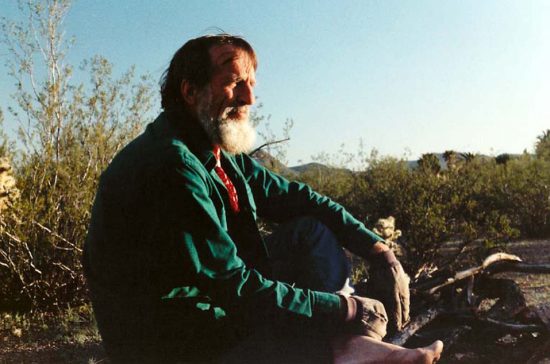
Just a few weeks earlier rookie ranger Edward Abbey had “EOD’d” (entered on duty) as a seasonal ranger. He was stationed at a small trailer near Balanced Rock. Abbey’s intolerance of “fools” probably exceeded that of his boss.
Jump ahead more than 20 years. A rookie ranger myself, I had wandered off the trail near Balanced Rock, probably trying to avoid tourists and fools alike, when I found an old faded wooden sign. It was still attached to a steel pole and the routed letters were legible. It said:

“IF YOU MUST CARVE YOUR INTIALS, DO IT HERE.”

I carried the old sign back to the patrol cruiser and later planted it in the soil in front of my home. One day, months later, Abbey came by. I found him staring at my sign.
“Where did you get this?” Ed asked. He looked puzzled.
“It was lying out in the black brush behind Balanced Rock,” I explained.
“Of course,” Ed chuckled. “I remember now…I made that sign. Didn’t do a damn bit of good”
Later, he came back while I was on patrol and left his “mark” on the sign he had made in 1956. Today it is one of my treasures.

—Jim Stiles


Please read the Dec/Jan Zephyr (click on the cover)

And check out our advertisers. The ad links are hot and will take you directly to their web sites.  If it weren’t for these supporters, we wouldn’t be here.

Posted in Uncategorized.

Poking Through the Ruins #6 ‘Rusting Away, Beyond the Black Stump’

The Dec/Jan issue is ONLINE here:

Posted in Uncategorized. Tagged with .

Poking Through the Ruins #5 From YouTube: Home Movies of New Mexico in the 1930s

I stumbled upon this video recently. Remarkable old home movies of New Mexico in 1933.  It’s helpful to hit the ‘mute’ button. Apparently the film was recorded simply by pointing a camera at the screen and the noise from the projector is a bit annoying. ..JS


Read the Dec/Jan Zephyr Online:

Posted in Uncategorized. Tagged with .