When my friend Herb Ringer died three years ago at the age of 85, it was the end of an era for me. Remarkably–and appropriately, I’d say–he passed away on my birthday. Since our first meeting at the Arches National Park campground in the early 1980s, we had become and would remain loyal friends and kindred spirits. Although many decades separated our ages, we were of the same time in so many ways.
Herb was, in fact, my Time Machine. He remembered everything. I could randomly toss out a date and he could tell me where he was and what he was doing and who he knew. He remembered how it felt to be alive at that moment. Herb connected me to a simpler time that I found (and still find) myself longing for, a time that occurred years before my own birth.
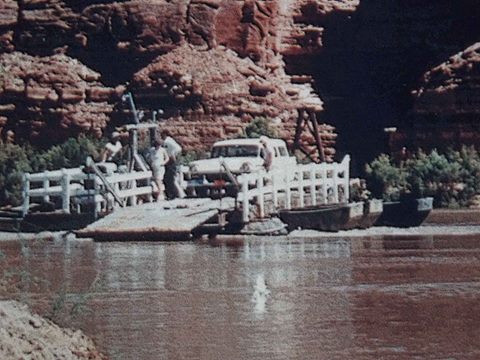
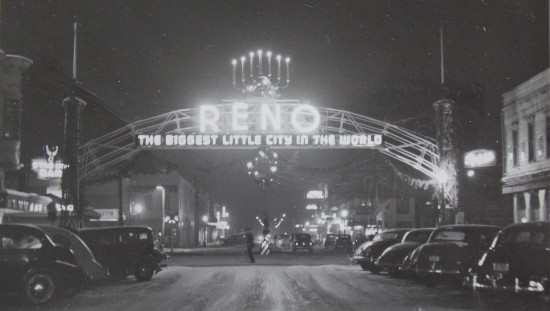
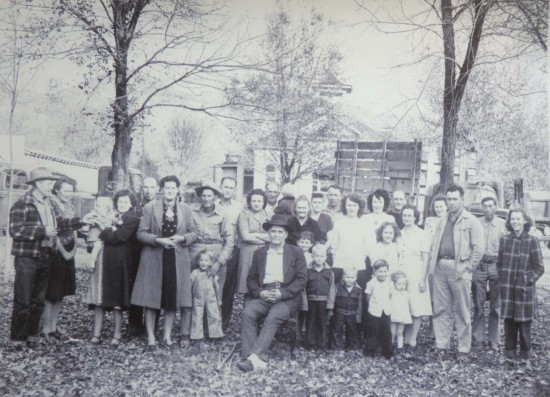
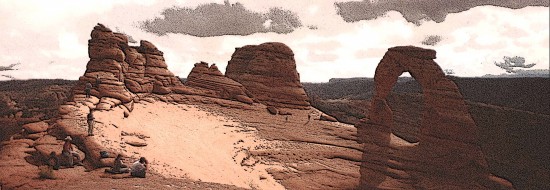
And he documented everything. Beginning with his first trip across the country to Reno from New Jersey in 1938, to Herb’s last cross-country journey in 1994, he missed nothing. His photographs are not just of the scenery but of Americans who traveled across it. While we snapped pictures of Delicate Arch or the Grand Teton, Herb turned the camera back on us. His collection of photographs are of gas stations and cafes and parking lots and old motels and dilapidated buildings. He recorded the crowds of tourists before they could be called “crowds.” I recently found a color slide of the Grand Canyon viewpoint in front of the Bright Angel Lodge. On a bright day in May, about ten people lined the rock wall that hugs the South Rim. No pushing and shoving to get a glimpse of the Inner Canyon back then.
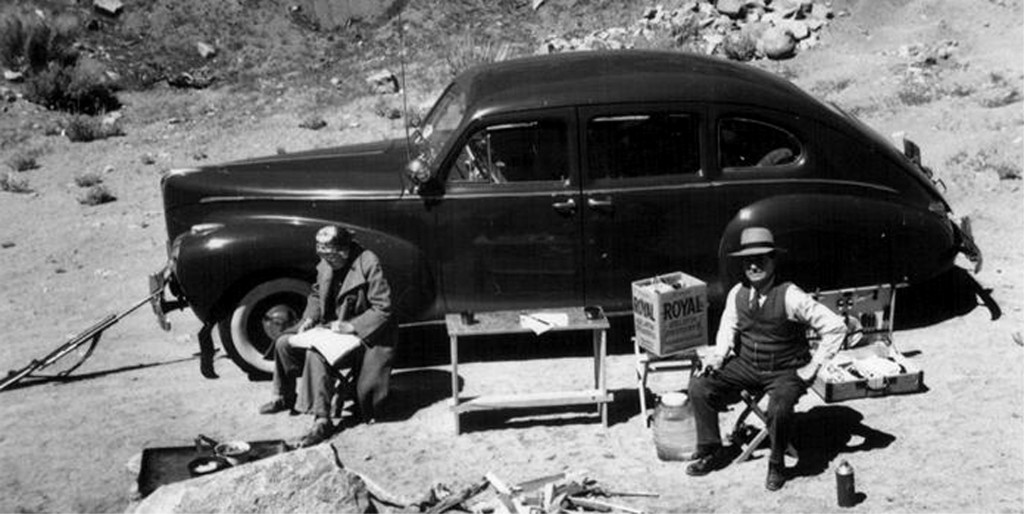
In almost every snapshot, you’ll find Herb’s mother and father. After he had established himself in Reno and found work at a local grocery, Herb drove east again and returned with his aging parents–he took care of them for the rest of their lives. Joseph and Sadie helped out at the Washoe Market during the long six-day work week, but on Saturday afternoons, the Ringers often climbed into the family car (in 1942 it was a Lincoln Zephyr), drove into the Sierra foothills west of Carson City, and camped at a place called Hope Valley. Over the years, they returned again and again to the same campsite, to the same stone fireplace that Herb and his father constructed at the edge of a meadow in 1942. When I took Herb back to Hope Valley for one last look in 1995, he was able to tell me that it was his 260th visit. He didn’t forget a thing.
During the war, Herb found that running a market had certain advantages. He was never short of gasoline rationing stamps, he once explained with a wink, because women were willing to trade practically anything for sugar. The Great Basin was empty beyond anything we can imagine today and when he wasn’t traveling to Hope Valley with his folks, Herb spent many Sunday afternoons exploring old mines and ghost towns.
On December 7, 1941, according to his notes, I can tell you that Herb traveled exactly 165 miles, that he left Reno at 7:50 am, and that he spent some time that morning exploring the Boot Hill cemetery in Virginia City–he was concerned about its “tumble-down appearance.” Herb poked about the ruins of old Fort Churchill and from a high point along the road marveled at the “vast desert of high range country, stretching as far as the eye can see.”
That evening he “saw the lights of Reno for the first time at night from this high spot and it presented a beautiful sight.” Then, almost as an afterthought, he reports, “Thence down into town and found the extras on the street, declaring Hawaii had been bombed by the Japanese.”
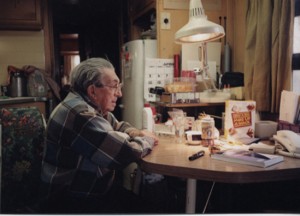 When his eyesight started to fail in the mid-1990s, Herb had to give up driving. By his estimate, he had traveled more than a million miles in America and Canada over 60 years. He surrendered his license with good cheer and proudly recalled that after more than half a century behind the wheel, he had never received a traffic ticket. In fact, he’d never even been pulled over. Now with no vehicle, Herb began documenting his walking schedule. He was able to report that in his first six months on foot, he had strolled 3000 city blocks, mostly to and from the Stockman’s Cafe’ and the grocery store in Fallon.
Herb found himself in a race with his own eyesight. Although virtually all of his color transparencies were labeled, the old black and white prints from 1939 to 1946 were not. He spent weeks and months cataloging and identifying those unlabeled photographs. Even as progressive macular degeneration finally rendered him legally blind, he would not give up. On one visit, Herb asked me to describe the scene in a stack of old prints. Incredibly, he remembered each and every image, as if the event had just occurred. He remembered names, he remembered the dates, the location…”Oh yes! The girl sitting beneath her own horse. Her name was Skippy and she claimed her horse was so well-trained she could sleep beneath it.”
He remembered the name of the horse too. But I don’t.

Herb’s last few months were tough, especially for him, as that vital connection to the past slipped away. I still believe that Herb actually willed himself to die because he could no longer be Herb Ringer. When his body finally gave up on him, in December 1998, Herb had already left.
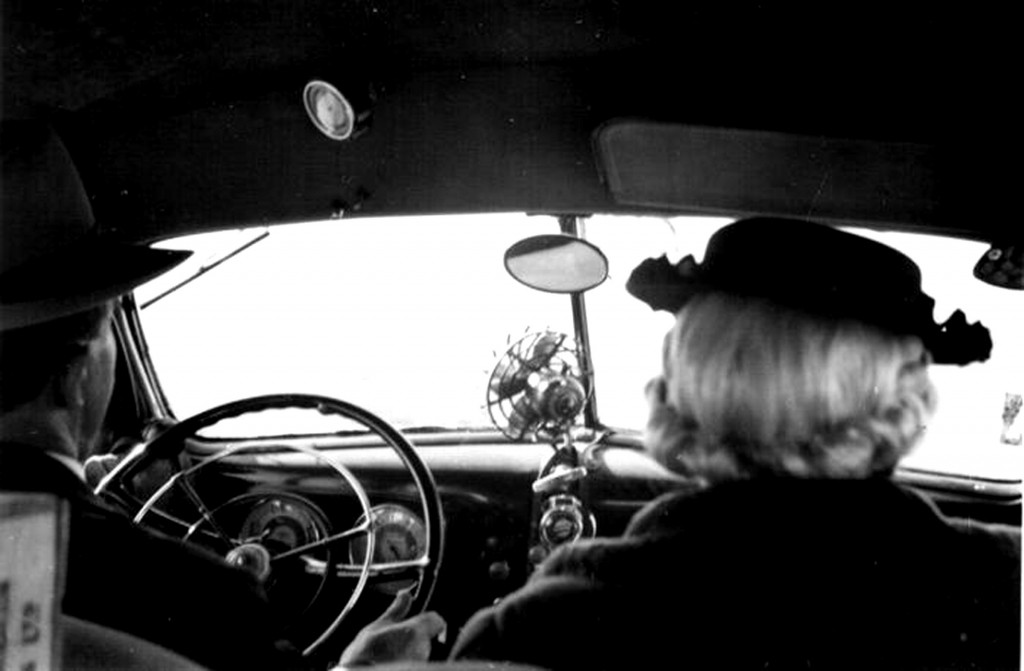
But in some respects he’s not too far away. The following spring, a green footlocker arrived here by UPS–his good friend Patty had bundled together the last of his personal effects, many of the photographs that appear in this issue, and his ashes, and sent them to me. I hope this doesn’t strike too many of you as morbid, but Herb and I have been traveling together ever since; on many of my own sojourns in the West in the last three years, Herb has occupied the navigator’s seat. I’ve been returning Herb to many of his own favorite spots and leaving a part of him there. I’ve scattered Herb in the Grand Tetons and in the mountains of Colorado and on the High Plains. I’ve left a bit of Herb at the Lion’s Park here in Moab by the Colorado River Bridge, where he often camped. And at the Devils Garden campground where we met. Next summer I hope to make a second trip to Hope Valley, Herb’s 261st, and search for that particular meadow and his special campsite.
As if he wasn’t there already.