Skip to content


(YouTube) Music from ‘LONELY ARE THE BRAVE’ (opening scene)

Posted in Uncategorized.


(THE ZEPHYR INTERVIEWS…from October 2002) ‘LIVE! with KATIE LEE’

Zephyr: It’s been about a year since you took a dive down some basement steps and almost got yourself killed. How are you doing now?

Katie: Emotionally, I have certainly felt much better. You picked a bad time to ask, after the death of my dear friend, Kenton Grua, and a week later, Frank Wright (one of “We Three” of Glen Canyon); my river guide-fellow explorer-confessor- supporter-comrade-sympathizer and devoted, understanding friend.

Physically, considering what happened, I’m in better shape than anyone should be–both wrists broken, left upper jaw dislocated, left middle finger broken in two places and bent backward, leaving it kinda crooked; giving a bit of comic relief when I raise it to express my displeasure. Not exactly a ‘hi five’, more like a ‘hi one’.

I have some trouble on the guitar now with that particular finger–it doesn’t bend down too good on my minor bar chords and I often get cramps in my hands and fingers. But…so what? I was never that great on the guitar anyway. It’s the words that count.

Z: When did you start playing the guitar and singing? Did you know early on that you were born to perform?

K: I didn’t pick up the guitar to play it myself until WW2. Many of my buddies, cowboy friends, local Tucsonians, played guitar. I sang with them. It never entered my mind that I would be a troubadour. I was going to be an actress. And I was.

At the age of 16 I knew I was born to perform. I walked onto a high school stage in the leading role of a play, knowing, all my lines and everyone else’s, felt those lights hit me (and I was scared shitless, standing in the wings) but it was just like walking into my living room. I was at home. I will never forget that feeling, that illumination. From then on, I knew what I was going to do–somehow, I would find a way. This was during the Depression, we had very little money, but my mom and dad were supportive and somehow they managed to come up with enough loot for me to take dramatic lessons once a week.

Z: I want to hear about your Hollywood days. Tell me the juicy stuff.

K: Oh boy, you’re asking for it, Stiles! There was nothing juicy about Hollywood. It’s the smallest town in the world. Everyone knows what everyone else is doing before they do it. I appeared in many movies in bit parts, never anything big, but it kept the wolf from the door. I had a policy, not to fraternize with my fellow actors, so I didn’t do a whole lot of fornicating during those years. Un–well, with one actor, not a movie one, a stage person. I sorta stuck (you can use that anyway you choose) with him most of the time–we’ll call him “one of my leading men”. There. Is that juicy enough?

Hollywood is where I became a professional folksinger–known more for that than my acting. The timing was perfect. Folksinging hit the market and I already had the goods, though by that time I wasn’t singing cowboy songs, but American- Scots-Irish- English-Australian drover ballads. I got myself on three popular NBC shows; The Great Gildersleeve, Halls of Ivy (with Ronald & Benita Coleman), The Railroad Hour (Gordon MacRae) with running parts–which means that you have a character and you come back every few shows, when they write you in. On Gildy’s first show, I got over 500 cards and letters from all over the USA, which he had never gotten, and Gildy felt threatened to the point where he asked the writers not to be so generous with my “character.” I’ve an essay about all this Jim, coming out in my next book, so I don’t want too say much more about it.
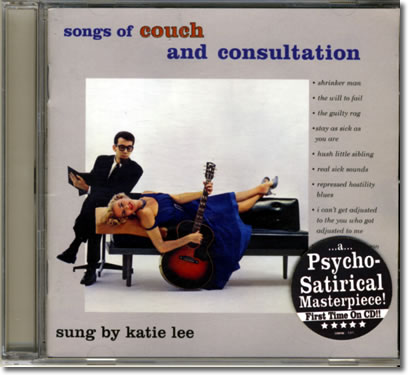
Z: What was Burl Ives really like?

K: Hmmmm. I wonder if anyone knows what Burl was really like. I met him a couple years before he became “Big Daddy” to everyone from the character he played in Tennessee William’s play, and film, Cat on a Hot Tin Roof. I think he was a man pulled into a spotlight that was out of character for him. I make that analogy because I knew (especially after the river encounter) that I couldn’t handle fame. I don’t believe Burl was the type who could either, with any sincerity or humility, but he wanted it (he’d worked damned hard for it) even if it wasn’t in him to deal with it. I may be totally wrong about that, but I remember a man who, after a blunderbust of ego, would feel like getting on his boat and fighting the wild North Sea, to wash himself clean of all that bullshit.

He was a generous man with his time and his good advice. He helped countless would-be and truly good artists reach their goals. Why I was one of them, I never really knew, just put it down to the fact that he wanted my bod–which he never got. Or maybe he thought I was one of the talented ones. Whatever, he certainly helped me accomplish my goal.

Z: Had you already started to mix your music with your passion for the canyons when you first went down Glen Canyon?

K: I guess I had–my feelings, passion, for the canyons came out in my music. I didn’t really write a lot of songs before then. Folksongs are folksongs, and I sang them; doctored some, added some verses to a few, made arrangements of traditional ones–but write new songs? Huh-uh. Even my first river song (about the Grand Canyon) was based on a popular song of the day–Terry Gilkyson’s Cry of the Wild Goose . I called it the Boatman’s Song, written about Jim Rigg. I used the same tune (with permission from Terry) and in the chorus, similar lyrics. But after that, the songs were my lyrics and tunes, dictated by that River. Like when I first went down Glen and the San Juan the following year, I had written most of Muddy River before I even got there, just listening to Frank and Jim tell stories and show me the movies and slides of their trips. Of course by then, I was totally hooked, and when we found out the politicos were going to take it all away from us, that’s when the protest songs began, to help save that incredible canyon. Up to then, I hadn’t truly realized the power of music, the potency of song.
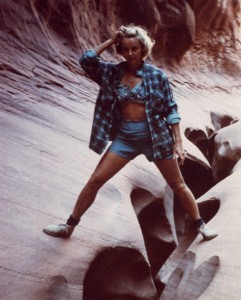
Z: Tell me again about that first trip and your compadres. The We Three.

K: Tell you what about it? I’d run the Glen and San Juan 5 or 6 times by then. Out first We Three trip was the fall of 1955. Frank and I planned it at Stone Creek one night on my second Grand Canyon run. It was to be his first ‘vacation’ trip–and it damn well was. Up to that time (almost ten years) he’d been flunky, guide, boatman, leader, cook, dishwasher, councilor, arbitrator, builder or boats, painter, accountant, shopper, shuttler, trainer, pilot and weather man for anywhere from 5 to 25 passengers per trip, ten or more trips a year. “E–nuff!” I said. “Tad and I will take over the oars, the food, the cooking and camp making. You bring your camera. We will explore new canyons, do whatever, whenever we damn well please, and nobody, but nobody gives us a schedule.” Tad was gung-ho to go with his own camera; with no restrictions or interference from yakky passengers. Frank came off of that trip a new man with a wholly different feeling about the river. Up to then it had just been a ‘job’. Now it was entwined with feelings he didn’t know he possessed, and a love for the place he hadn’t realized in his frenzy over being responsible for everyone safety and caring for everyone’s needs, as he’d always done-and continued to do on the Mex. Hat Expedition trips.

Z: When did you decide that you’d had enough Hollywood Bullshit?

K: In the fall of 1954, when I left to hit the road and go to Shit-cago. Burl Ives got me signed up with his booking agent, and that began a solo, singing-with-guitar career in Coffee Houses, Bistros, Hotels, Lounges and assorted Stages all over the USA and part of Mexico. Did it for ten years.
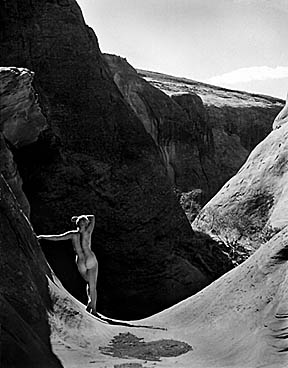
Z: What’s the deal with you liking to be photographed naked? And when are they going to put some of those pictures on billboards? Have you ever thought about selling the Katie Nudes as screen savers?

K: Oh boy, I can’t wait to answer this one!-I DON’T like to be photographed naked. I have not been photographed naked but a couple of times in my twenties–even those were done in good taste, favoring my best ass-set, my rear. I certainly never made a practice of it–was simply photographed by a current paramour who wanted to recall my naked charms–as I suppose many women have been by their husbands or boyfriends–not for billboards, pegboards, cribbage boards, dartboards or surfboards. The way you phrased the question gives me a pain in my once-upon-a-then-beautiful ass–linking it to tawdry commerce instead of art, nature, and a wilderness that inspired the photographs, and where I was the only woman for miles around who could climb the rocks without killing herself. When I’m in the wilderness, I like to be with nature “naturally“, as do most people I know who have had any intimacy with wilderness in faraway places, away from strangers where there are no cameras, and no voyeurs hiding in the bushes. We wear our skins because it’s the natural thing to do, not because we’re trying to show off our bodies. Maybe you should try it-loosen you up a little bit. The Glen Canyon shots–the ones you refer to–were all taken by two professional photographers, Marty Koehler and Tad Nichols, on the 1957 trip; taken in two different canyons on two different days, and never were there anymore, anywhere on the river, or in the surrounding canyons thereof. Glen Canyon Institute asked if they could use The Pagan (the one in the book) as fund-raising poster. And though I didn’t think I’d be peddling my ass at 82 years old, I said, why not? It’s for my river. Up yours, Stiles!

Z: OK…Katie. You’re Beyond 80 now. What are the things about Life in the 21st century that worry you the most. And what aspects do you find most encouraging?

K: What worries me more than anything right now are the Winds of Fascism in our current government-our privacy, our civil liberties being stealthily swallowed up by Phantom Terrorism–people at the helm who scare the shit out of me. We always say, “it can’t happen here,” but of course it can. I was born in an era when we still had real, dedicated, mostly honest STATESMEN. They are all gone. There hasn’t been a statesman, a LEADER, since Roosevelt. I’m A-political, but I know we are in deep dodo as a country, as a continent, as a planet. I know there are way too many of us trying to feed off of this blue ball, and nobody’s doing anything about it. I’m sure that Mother Earth will take care of herself before she takes care of us-I’m out of here pretty soon, so when the last morsel blows up the fat belly, I won’t be around to worry about it, but the rest of you had better start paying attention to what’s happening. Not just pay attention. DO something about it.

The thing I find most encouraging are the grassroots groups who are acting locally. It’s about the only way anything gets put to rights anymore.

It is a long, arduous struggle, but those groups are the only ones making a difference, even if it’s merely calling attention to something most of the rest of the world hasn’t a clue about-and most often doesn’t care unless it affects them someway, or can be shown that it WILL affect them in the future.

Z: How do you feel about entrusting the future to the “Youth of America?” Do you have any advice for them?

K: Who else are we going to entrust it to? When I do my readings and songs at grade schools, where the students are between ages 13 to 15, I am overwhelmed by their interest, participation and awe. I receive letters, notes, drawings and questions from them a week or so after I’ve gone. Now, I realize this is part of their curriculum; they are required by their teachers to do that, But their questions and statements are far more thoughtful and intelligent than those of our elected politicians. What does that tell you about the State of the Union? In Colleges and Universities I get a lesser percentage, but a more dedicated attitude. How long that lasts, I never know. I can only hope that the sincerity, the will and passion that I hear to DO something about it, will continue on, and at some point form a nuclei. As to the younger ones, a lot depends on the home they come from, how their feelings about what I say will be either encouraged or crushed by their parents. I can only say, I’m more encouraged by the youth I encounter than I am by the old (and many young) farts that are supposed to act as our voice and in behalf of our dying planet, but don’t give a big rat’s ass about anything but their purse!

Z: A lot of people, including me, regard you as a hero. Who are your heroes?

K: Hero. That’s a potent word. You have to be careful of it. Most of the truly valuable people that I highly respect don’t want to be that word. Heroes tend to be worshiped for themselves instead of what they stand for. I don’t know why that is, but too often it comes out that way. You and I understand that Ed wouldn’t want to be called a “hero.” I don’t either. I’ve noticed that people, who have any influence on generations to come, leave it in the printed word. That word gets sent down through the ages and used again and again in various cultures and countries to validate one point or another. I discovered in mid-career that people listen to music when they’re sick and tired of listening to words-that sometime with a tune you can make words sound like “music to their ears” and they’ll get the message whether they want to or not. But that lasts only for a few generations, not centuries. As for me, I haven’t the talent, or knowledge, or background to produce lasting wisdom in words; mine will waft away on thin air after a couple generations. So, I ain’t no “hero”. The hero is the Colorado River. It (he) will win out through the ages; be there when the human race is long gone.
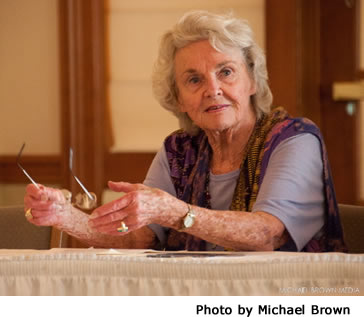
My luminaries are folks like David Brower, Martin Litton, Ed Abbey, Josh White, Frank Wright, Ellen Meloy, Mark Reisner, Rich Ingebretsen, Dave Wegner—many, many more I haven’t space to mentioned–and strange as it may seem, a brave little guy who had the gonads to start an alternative newspaper in what was then, and probably still is, Redneckcountry, USA, just outside the Gestapo county of Utah.

Z: What do you think the world will be like in 25 years?

K: The shit will be deeper. Solutions less possible and with any luck–Revolution! Here, where it belongs, not in some goddamn foreign shore where we have no business to be–but only if there are any balls left in this country by then. And before some ignorant smartass calls me unpatriotic, remember this: A patriot doesn’t stand behind the flag; he stands before it making the changes necessary to honor it.

Z: Glen Canyon Dam…will it be here in 40 years? Give me odds.

K: Sure-probably in 100 years. But the water going around it will be a river once again-having chewed the sandstone away and made its channel to the Sea of Cortez. And the canyon will eventually heal and return to the Eden it was, given another 50 years of free flow. It will then either be protected as a Sanctuary, or trashed like the Grand Canyon, depending on whether you have a dictator by then or government, once again, by the people.

Z: Is there anyone right now, in particular, anywhere, that you’d like to call a f—— asshole?

Katie: More than one: The noxious weed and all the poisonous roots under the hothouse dome.
Posted in Uncategorized.


(from ABC Australia) ‘Why sustainability is bad for the environment’ —Paul Kingsnorth

AN EXCERPT:  Today’s environmentalism is as much a victim of the contemporary cult of utility as every other aspect of our lives, from science to education. You won’t hear many greens today talking about their emotional reactions to the wild world. Instead, you’ll hear them promoting something called ‘sustainability’.

We hear this curious, plastic word everywhere. But what does it mean? It does not mean what it ought to: defending the non-human world from the ever-expanding empire of industrial humanity. Instead, it has come to mean sustaining human civilisation at the comfort level which the world’s rich people – us – feel is their right, without destroying the ‘natural capital’ or the ‘resource base’ which is needed to do so.

A strange confusion has come about.

CLICK THE IMAGE TO READ THE ARTICLE…

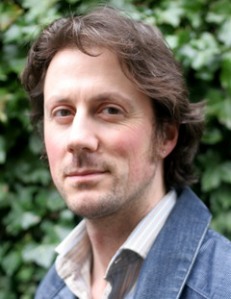
Paul Kingsnorth

TO READ THE CURRENT Z CLICK HERE:

TO READ ALL ZBLOG POSTS CLICK HERE

http://www.abc.net.au/unleashed/4290720.html

Posted in Uncategorized.


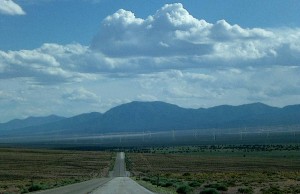
(August/September 2013) Renewable Energy: Shredding the Magic of Nevada’s Great Basin…by Scott Thompson

An excerpt: “Experiencing the Great Basin Desert in Nevada seems to involve an inner war of perceptions. Here’s how it went for me.

Just after Gail and I turned our rental car due south on Alternate U.S. Highway 93 from the fortress of casinos lining the border town of West Wendover, Nevada – servicing the good Mormon sinners of Salt Lake City – into the empty salt flats, it felt like we were sliding into another world.

And a forbidding one, even to a lover of other Western deserts. I think one of the reasons is the odd, whitish hue of the low-lying salt flats, whether they’re vast white playas or episodic alkaline lowlands. In large part they’re remnants of land-locked lakes and pools during the last ice age. As the Holocene warmed the atmosphere they dried up; today salt-whitened playas in the Great Basin are partially filled by water from snow melts and episodic thunder boomers.”

To read more of Scott’s article, click the image below:

sht-aug13-4

http://www.canyoncountryzephyr.com/2013/08/01/renewable-energy-shredding-the-magic-of-nevadas-great-basin-by-scott-thompson/

Posted in Uncategorized.


(YouTube) ‘FDR: I Welcome Their Hatred ‘

http://www.youtube.com/watch?v=_RP_8bwhNVw

Posted in Uncategorized.


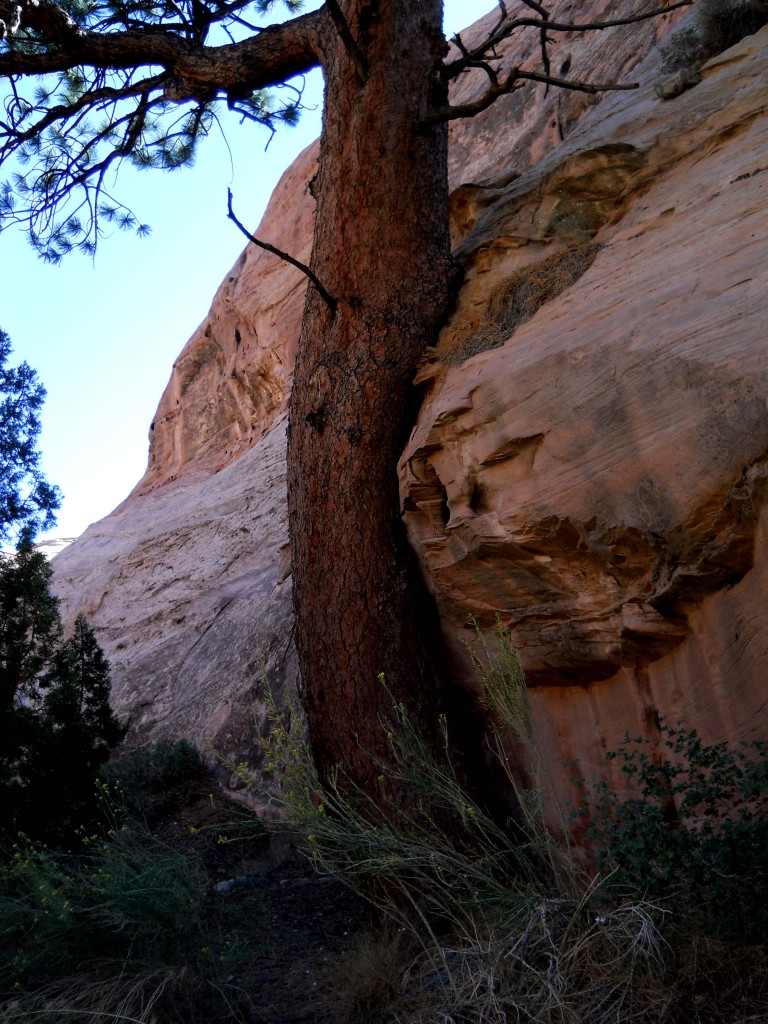
Dec/Jan Z) ‘MYSTERIES of the CANYON COUNTRY: The Lonely Pine—A Last Remnant or a Stubborn Interloper?…by Jim Stiles’

AN EXCERPT:  How did the canyon country once look, in a different time and in a different world?  Maybe a few hundred or thousands of years ago?  In many respects, especially when it comes to our precious slickrock, the changes would almost be imperceptible. But in other ways, and in the relative blink of an eye, our part of the world is very different.

TO READ THE STORY AND SEE MORE IMAGES CLICK THE LINK BELOW…

DSCN5874


http://www.canyoncountryzephyr.com/2012/12/01/mysteries-of-the-canyon-country-the-lonely-pine-a-last-remnant-or-a-stubborn-interloper-by-jim-stiles/

Posted in Uncategorized.


(The Wrong Kind of Green) Keystone XL: The Art of NGO Discourse | Part I

An excerpt: On Nov 3, 2009, Berkshire Hathaway, the investment vehicle of Warren Buffett, announced its plan to purchase the 77.4 percent of Burlington Northern Santa Fe (BNSF) that it did not already own for $26 billion in cash and stock – the largest deal in Berkshire history. The deal, which included Berkshire’s prior investment and the assumption of $10 billion in Burlington Northern debt, brought the total value to $44 billion. Buffett remarked it was a big bet on the United States.

It was TO be a bet that both President Barack Obama and Secretary of State, Hillary Clinton, would ensure he DID not lose…

Click the image to read more:

buffet

http://wrongkindofgreen.org/2013/04/12/keystone-xl-the-art-of-ngo-discourse-part-i/


Posted in Uncategorized.


(YouTube) ‘RIP RIP WOODCHIP’ from Australia’s great singer JOHN WILLIAMSON

http://www.youtube.com/watch?v=zOQKzvXKW5Q


RIP RIP WOODCHIP

Words and Music by John Williamson


What am I gonna do – what about the future?
Gotta draw the line without delay
Why shouldn’t I get emotional – the bush is sacred
Ancient life will fade away
Over the hill they go, killing another mountain
Gotta fill the quota – can’t go slow
Huge machinery wiping out the scenery
One big swipe like a shearer’s blowRip rip woodchip – turn it into paper
Throw it in the bin, no news today
Nightmare, dreaming – can’t you hear the screaming?
Chainsaw, eyesore – more decayRemember the axemen knew their timber
Cared about the way they brought it down
Crosscut, blackbutt, tallowood and cedar
Build another bungalow – pioneer town

I am the bush and I am koala
We are one – go hand in hand
I am the bush like Banjo and Henry
It’s in my blood – gonna make a stand

Rip rip woodchip – turn it into paper
Throw it in the bin, no news today
Nightmare, dreaming – can’t you hear the screaming?
Chainsaw, eyesore – more decay

Rip rip woodchip – turn it into paper
Throw it in the bin – don’t understand
Nightmare, dreaming – can’t you hear the screaming?
Stirs my blood – gonna make a stand
© 1989 Emusic Pty Ltd

Posted in Uncategorized.


“There’s only one NIK HOUGAN” (from the 1996 archives) —Stiles

     President’s Day Weekend in Moab…the first crazed tourist invasion of 1996. On Main Street, traffic thickens like crankcase sludge on a cold day, and moves about as fast, except for the 18 wheel truckers who thumb their noses at the speed limit and weave their way through traffic like 85 foot long sports cars. Recreationists fight for parking spaces and jockey for tables at their favorite cafe. Everyone is looking at each others’ new outfits; after all, this is the first chance to show off the latest in Lycra Fashion for ’96. Moab merchants, hungry after the lean winter months, hope for a good weekend. But they worry about making payroll, fret about the scarcity of labor, check their cash flow charts, consult the computer, and wonder if they’ll still be in business at the end of the season. There’s a lot
of stress in the little town of Moab these days, whether you live here or not.
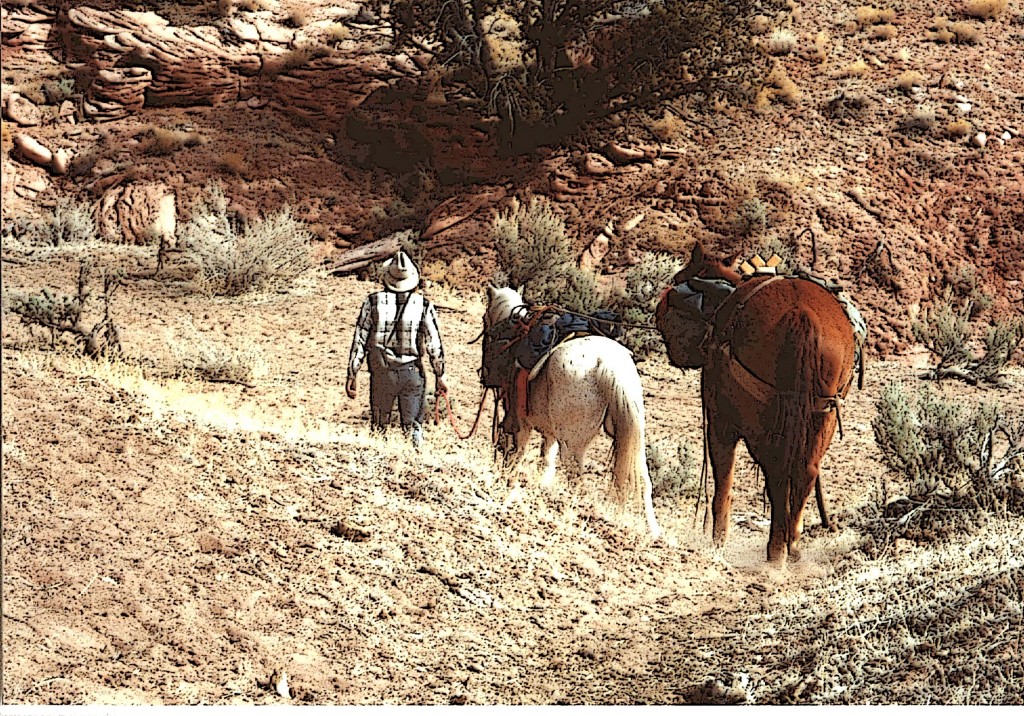
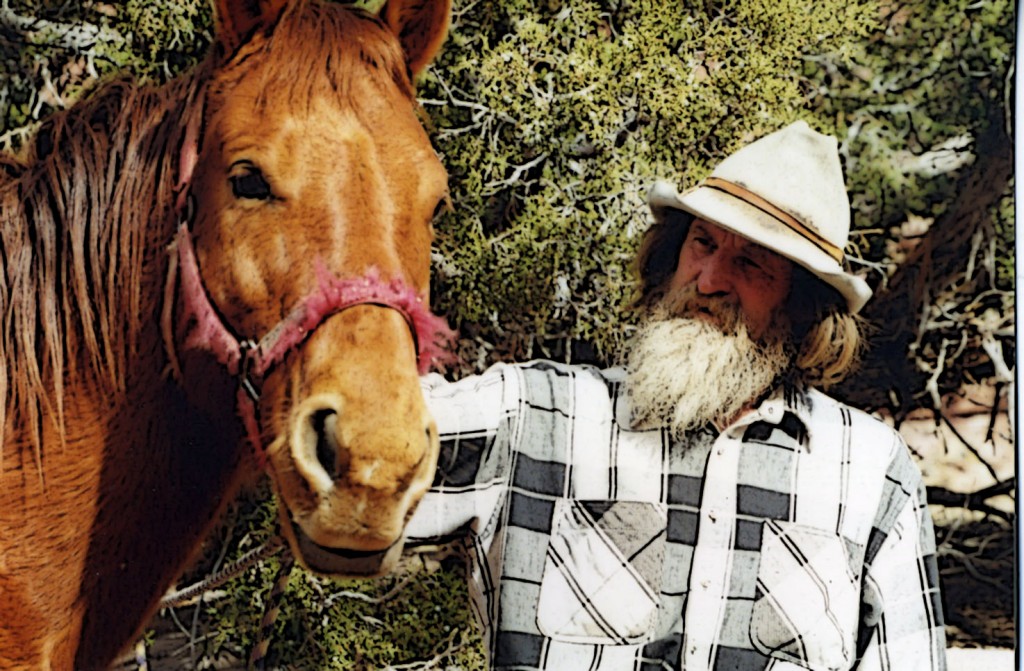
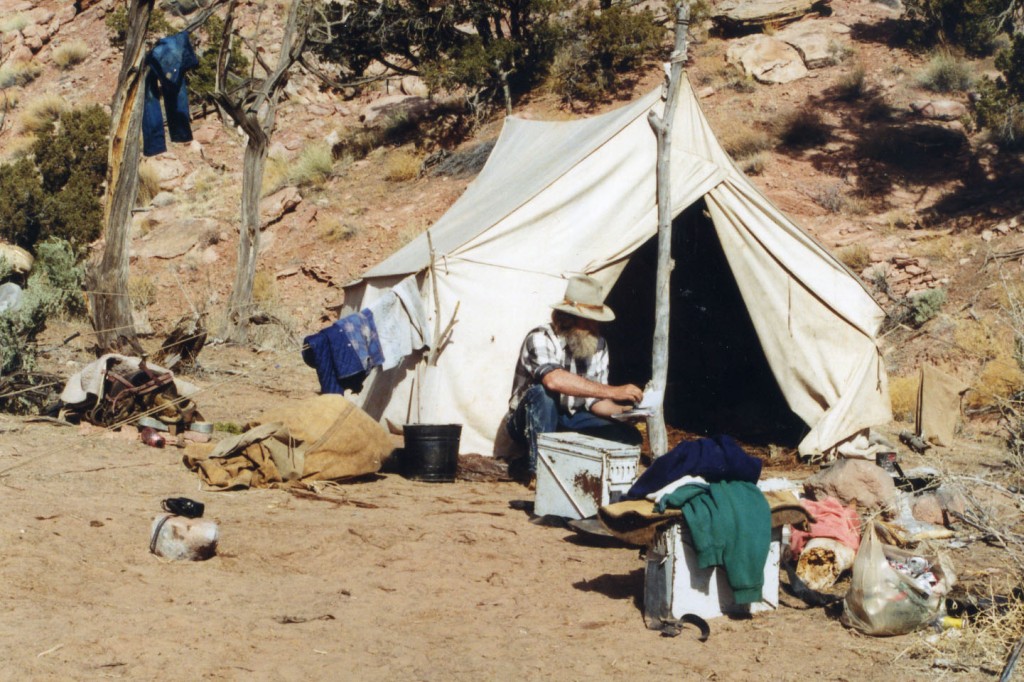
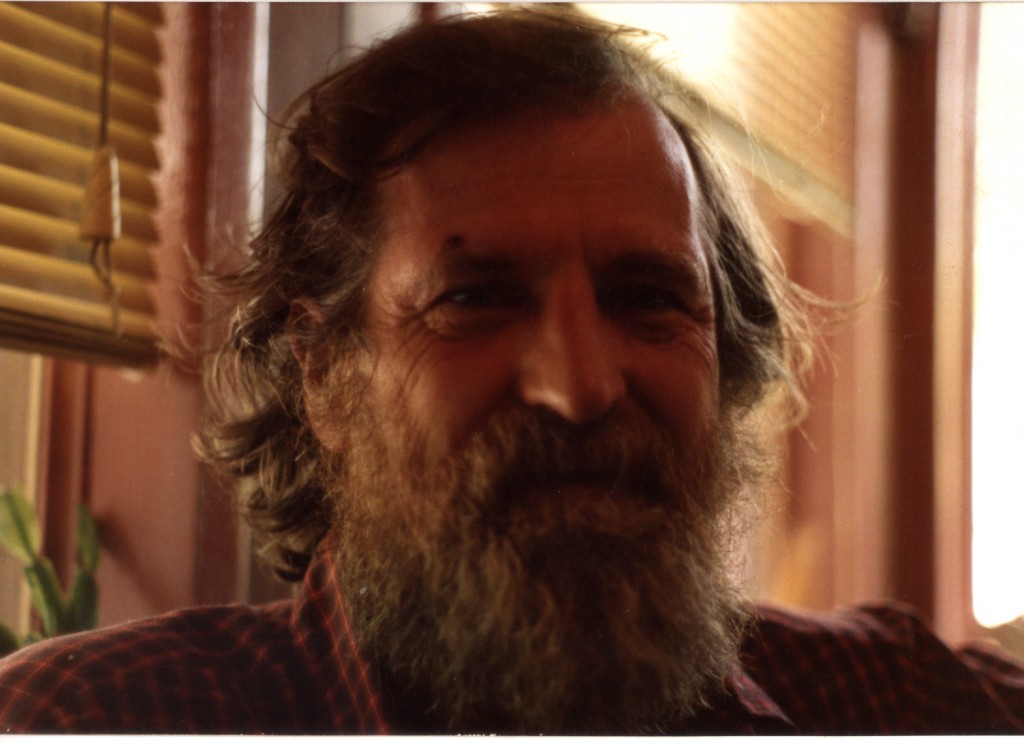
But several miles from downtown Moab, in a secluded and still mostly undiscovered canyon, Nik Hougan carries none of the trappings of 20th Century life, even as we’re about to enter the 21st. His string of horses are his only means of transportation, his home is the white canvas wall tent that he’s pitched on a grassy shelf above and away from the creek. Somehow, Nik has managed to preserve a way of life that most of us only read about. He’s an American Original…there’s no one quite like Nik.

Talking to Nik Hougan is one of the easiest pleasures on Earth; finding him is something else. On a sunny Saturday morning, after wading my way through the bikers on the Sand Flats, I turned off on a dirt track for a half mile, then parked and hiked along the canyon rim until I spotted his camp. I picked a route down the talus and 30 minutes later, I was in the canyon. Nik stepped out to greet me, smiling broadly from behind his long sandy beard. But he was worried that I’d made the trip for nothing. He was just now saddling up to ride into town for a day or two and, after all, it’s sort of difficult to call ahead. Cell phones are no more in Nik’s future than a Winnebago.
We decided we could talk as we both walked out of the canyon. Nik led his horses and I unloaded my tape recorder. For the next couple of hours, Nik told me about his life. Most of what follows are in
Nik’s own words…
At first Nik seemed reluctant to talk about the details of his earlier life, but I’d missed the point. “It doesn’t matter,” he explained. “It just isn’t that particularly exciting. I grew up in the average dysfunctional family, middle-class, working professionals, and lived all around really. I grew up in the Northwest, but I also lived in Las Vegas when all that was being built up in the 50s. I dropped out of high school in my junior year at Newport Beach, California and went into the Navy. I got out, drifted around in the merchant marines…this and that.

“I moved to Moab in ’73. I was running rivers, working part-time for Sam at the Times-Independent, and managed Sidewinder River Expeditions for awhile, but first I was an artist and a cartoonist. I did some political and environmentally oriented cartoons for the Sunday supplement to the Oregonian. But back in ’79 is when I really tried to make a go of it with just my art work. It’s been hard…it’s hard now.”
Nik’s work is all over town…literally. If you see a big mural, it’s probably Nik’s. He just did a T-shirt design for the Poplar Place and he may start work soon on an outside mural for Eddie McStiff’s. When Nik says he’s going to paint the town, you have to ask him to be more specific.
I’ve always wondered if there had been a day in Nik’s life when he made the conscious decision to walk away from modern society (so-called) but he makes no such claim. “It just sort of happened. I always loved being outside as a kid, one thing led to another, and now it’s hard for me to do anything else. After all this time, I’ve pretty much lost a lot of my social skills, actually. Even this time back in Moab, I thought about re-integrating with the community, getting involved in things, you know, do all those normal things that civilized human beings do…Absolutely zeroed out on it. Now I’m ready to saddle up and head out.”
I asked Nik if he worried about things like health insurance. It took him a few seconds to stop laughing so he could answer the question…
“No, Jim. No insurance. No credit cards. I don’t even have a driver’s license anymore. I think it expired about nine years ago.”
We paused for a moment to re-gain our bearings and to take in the view on this mild and sunny February day. A golden eagle soared above us, below we could hear the creek as it tripped over sandstone shelves and fallen trees on its way to the Moab Valley. I asked Nik what he thought of the New Moab.
“I find it painful. Even where we’re at right now, I’ve always used this beautiful spot when I’m working out of Moab. But with that blankety-blank new road development on the Sand Flats, it’s ruined. Any day now, there’ll be hordes of people down here and one more beautiful, pristine place will be destroyed because everybody comes out here turning the country into what they’re trying to get away from. So anyway…that’s my bitch with Moab.
“But the changes I’ve seen in 20 years are amazing. I find people everywhere these days. I used to go into the Waterpocket Fold and once I found this cowboy cave. There were old charcoal writings, going back to 1927…some guy named ‘Shorty,’ with the ‘S’ spelled backwards. The whole cave was full of old cans and being in that cave and out of the weather, even the labels on the cans were intact. Today, there’s a marked trail going right through that spot.”

Still Nik perseveres. And so for much of the last 20 years, Nik has been camping out. As a result, cities have become a treat of sorts, when taken in small doses. “I guess in the tradition of the cowboy, the miner, the mountain man, or whatever, you go into town and you’ve got some money, and it’s like going to the carnival. It’s new, it’s fresh. You get drunk, there’s women…there’s a definite lack of women out in the hills. I’ve always referred to it as ‘going to Dodge’ or ‘hurrahing the town.’ It’s OK for while.”
The money Nik gets to ‘hurrah the town’ comes mostly from his art; although he’s done some cowboy work to get by, he doesn’t particularly like it. “I don’t make too much money cowboying because I’m much too lazy that way. It’s not my life. I’m an artist and I work hard at that. I sell enough of my work to survive this way. But living in town, I’d have to rent a place, find a place to board my horses, buy hay, and all of a sudden, there’s all these expenses of living in town. I’m still trying to make ends meet on an income that works in the wilderness. It’s a hole that’s hard to get out of, once you get in it.
“I thought, though, even last fall, that maybe I could re-join civilization, but…I don’t know…it may be too late. I can’t seem to make that adjustment.”
So I wondered. What does Nik do out here by himself every day? And does he ever get lonely?
“Well, there’s a lot of work that just goes into survival. Food and water. Taking care of my horses…their needs come first. Setting and breaking camp. And I’m sort of into yoga and mediation. I can do that for
hours. And I do my art work. I like to discipline myself to do so many paintings a month. I have to do that. Sometimes I get caught up in traveling and the weather, and this and that, and I have to work especially hard to stay on that schedule.
“So it’s never boring. But the loneliness is a totally different thing. It’s something you can never completely escape. I don’t believe it when someone says they never get lonely. Of course, some of the loneliest places I’ve ever been are in the middle of the city. It’s a burden everybody carries in their hearts. We are social creatures and it is hard to be isolated from other people. It’s probably not healthy…I’m probably crazier than a fruit cake.
“My horses are a great comfort to me. I’m with them all the time and I’ve gotten them out of a lot of dangerous situations. They’ll hang around the camp and they like to be scratched. I guess it’s more like the indifference of a cat, but they’re still very loving and affectionate. I’d like to think they can read my mind, you know?”
Despite the time Nik spends alone, he’s quick to point out that he’s no hermit. But a few years ago, Life magazine decided otherwise. According to Nik, a writer for Life who was working on a story about hermits and eccentrics heard about Nik and proposed to do a story about him. She tracked him down via a local cafe and presented the idea. Nik thought she was kidding. “I guess maybe I’m a little eccentric, but I’m no hermit. At the time I was even living with a woman and I told the writer that, thinking that ought to disqualify me right there. But it didn’t seem to matter to the writer. All of a sudden, a bell went off. I get it, I thought…they’ve already written the article. They already had their facts and I was their ‘character’ actor. So I figured, you want a hermit, you’ve got a hermit. And I made a point to lie about everything. Well, it was very distorted truths.”
Where to next? Nik and his horses are thinking about a summer trip along the spine of the Continental Divide this summer; yet, eventually Nik seems to always head back to Moab. “I have to admit though,” Nik worries, “Moab is starting to lose its interest for me, real fast. I love the town, I’ve always loved it, but it’s kind of a love/hate relationship too. There’s parts of it that exemplify the sinister aspects of everything that’s going on in our society. The sell-out of values, the exploitation of resources, and it’s kind of runaway in Moab right now.”
Outside Moab, Nik has had his conflicts with “progress” as well, especially with the BLM and certain law enforcement authorities in San Juan County. “I could wallpaper my walls with all the trespass tickets they’ve given me in the last 20 years, if I had any walls,” said Nik. He was once camped by Lake Powell and got a ticket because his horses were too close to the lake. The ranger told him his horses constituted a health threat. Yet, humans, not horses, have pumped so much raw sewage into the reservoir that entire sections of it have been closed to the public in recent years. Nik takes it all in stride.
I asked Nik where he thought he’d be twenty years from now. He chuckled.
“I probably won’t be around. This is a very dangerous lifestyle. I could be laying out there with a broken leg for a long time and nobody’s going to miss me. Nobody’ll be sending a search party, that’s for sure. But it doesn’t bother me. The whole world could end tomorrow. I try to live for the day. The moment. I try to, more and more…”

We came to a fork in the trail. I could climb out of the canyon over a rocky talus slope but it was too steep for the horses; we shook hands and headed our separate ways. When I reached the rim, I could see five or six Yuppie 4WD vehicles within a few hundred yards of the canyon that weren’t there this morning. Nik was right…the hordes are moving in. I looked back and below me. I could still see Nik and his horses making their way slowly along the trail.
There’s only one Nik Hougan, I reminded myself. I hiked back to the car, to my Yuppie 4WD and drove slowly back to town, the traffic, the crowds, and 1996.

UPDATE: In 2012, more than 15 years after this story was written, Nik is still out there in the red rock hills, being true to himself and to the land he loves…JS

TO PERUSE ALL OF OUR ZBLOG POSTS, JUST CLICK “THE ZEPHYR” AT THE TOP OF THIS PAGE
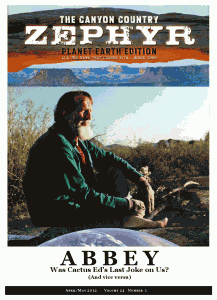
& FOR THE APR/MAY ZEPHYR: CLICK THE COVER

Posted in Uncategorized.

Tagged with , , , .


(YouTube) ‘A Bluegrass Music Classic – On The Porch’

Posted in Uncategorized.