Skip to content


“Re-defining Wealth” in the 21st Century— From the UN (Yahoo News)

UN panel says retool world economy for sustainability

The world can no longer afford to ignore the environmental cost of economic growth and must redefine the very concept of national wealth, a UN panel of heads of state and environment ministers said Monday.

The panel challenged leaders to recognise that “current global development is unsustainable.”

“We need to chart a new, more sustainable course for the future, one that strengthens equality and economic growth while protecting our planet,” UN Secretary General Ban Ki-moon said in Addis Ababa to mark the release of the panel’s report, which outlines more than 50 policy recommendations.

By 2030, the report warned, the planet will need at least 50 percent more food, 45 percent more energy and 30 percent more water.

http://news.yahoo.com/un-panel-says-retool-world-economy-sustainability-164515165.html

(click the photo to read the entire story)

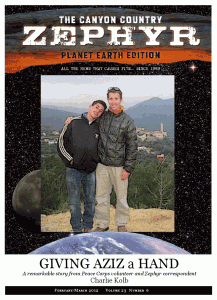
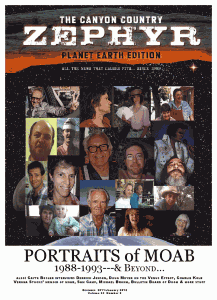
The NEW (Feb/Mar) issue is now online:

Posted in Uncategorized.


“Microscopic plastic debris from washing clothes is accumulating in the marine environment and could be entering the food chain…”

From the BBC…

Accumulating ‘microplastic’ threat to shores

By Mark Kinver Environment reporter, BBC News

http://www.bbc.co.uk/news/science-environment-16709045

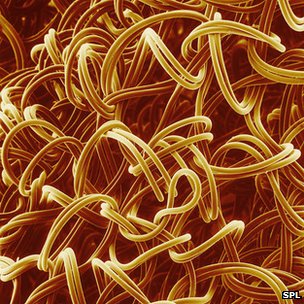
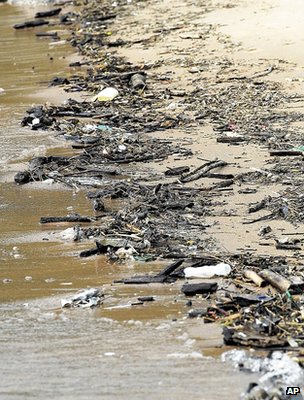
“Microscopic plastic debris from washing clothes is accumulating in the marine environment and could be entering the food chain, a study has warned. ..Researchers traced the “microplastic” back to synthetic clothes, which released up to 1,900 tiny fibres per garment every time they were washed…Earlier research showed plastic smaller than 1mm were being eaten by animals and getting into the food chain.”

click the photo below to go to the BBC story:

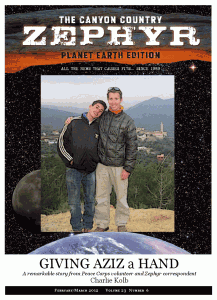
The new (Feb/Mar issue) will be posted early on February 1:

Posted in Uncategorized.


‘BRIGHT SPOT in OHIO’ —Martin Murie 2011

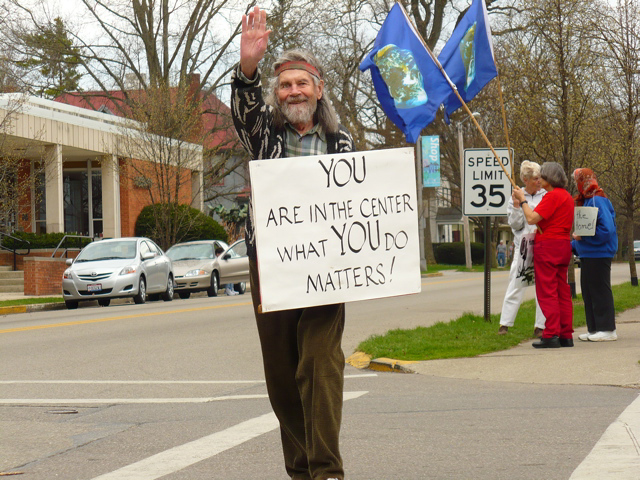
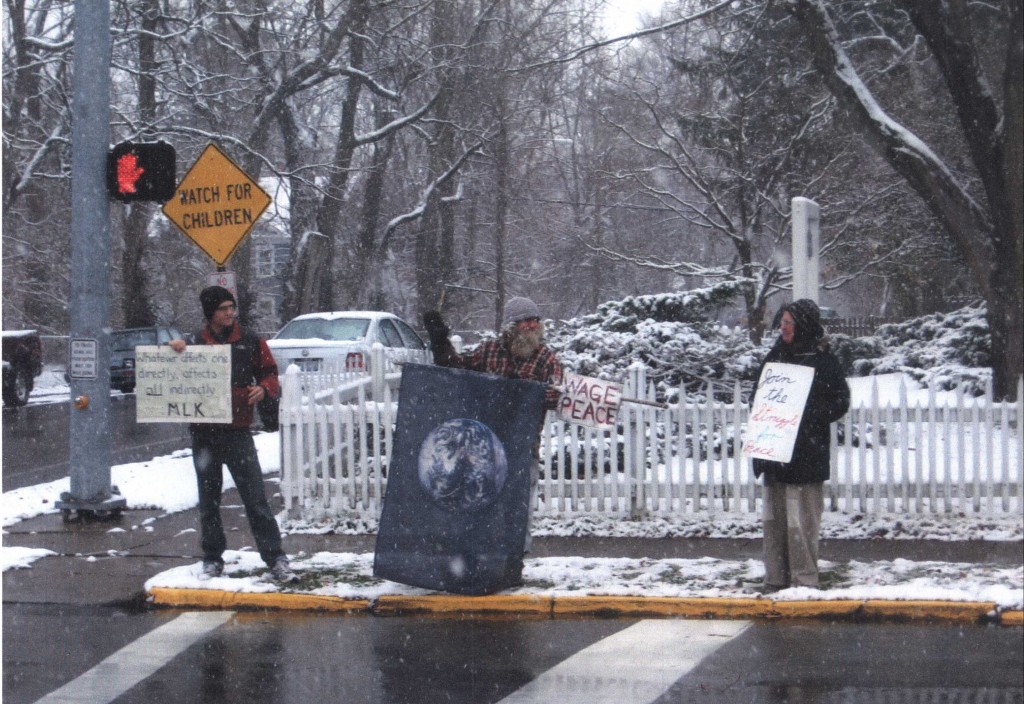
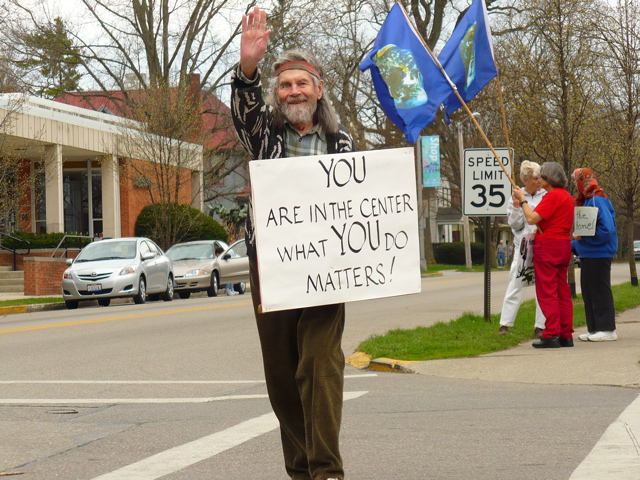
This is one of the last essays Martin sent me, from a few months ago. He was still actively, passionately and persistently involved in the anti-war movement. Each Saturday morning, Martin  and his wife Alison made their way to downtown Yellow Springs, Ohio to voice their opposition to the ongoing wars and, more importantly, to stand firmly for Peace. To the end, he was always optimistic.   Martin Murie really was a ‘bright spot’ for all of us    ––Jim Stiles

We have a thriving antiwar demonstration going in Yellow Springs, a town that served as an Underground Railroad station for blacks escaping slavery. Once, we were visited by three men from Pakistan who were defending Islam. We have been interviewed several times by the local paper.

Recently the local radio station talked to us.

The demonstration was started by a woman who was jailed for three months for defying the powers-that-be in the School of the Americas. That was eight years ago. We are  going on nine years now. So, every Saturday Alison and I drive eight miles from Xenia (couldn’t afford the prices for real estate in Y.S).

We have fun talking to regulars. Today we had 25 people on the four corners of the intersection.

I am writing this because my recent poster reads:

STOP WARS
IT’S UP TO US
WHO LOVE THIS LAND
HIT THE STREETS

I quote from the first paragraph of a piece in “In These Times” by Stephen Lerner, under the title “Take the Fight to the Streets:”

“THIS CAN BE OUR MOMENT. A new activism is emerging in the United States and abroad, where people, in unexpected places, are standing up to challenge the rich and powerful. From recent uprisings in Egypt, to young people and workers in Europe marching and striking against shortsighted austerity plans, to the battle of nurses, teachers, firefighters and community members in Wisconsin, and the sit-ins and occupation of banks starting around the country, a movement is starting to grow.”

Organizing for peace & justice, for equity & the common good, has an entirely different feeling from that of trying to jack up enthusiasm for some military adventure dictated by the interests of huge corporations. Corporations, which have been systematically robbing the workforce of this country by outsourcing jobs, cannot then demand the loyalty of that workforce by asking them to pay for military protection of the corporate interests. Particularly when the corporations themselves pay damn all in taxes.


Now we are fighting in Libya. We need to remember that each nation has its own path to salvation and that we should not attack others in defense of Democracy. Each nation has a different pathway to Democracy and we should be helpful in peaceful ways. The United States should not be in the killing mode to please the rulers of our nation. This
is just plain dumb.

Still quoting, Alexander Cockburn, in Anderson Valley Advertiser ( Mendocino Country, California), headlined, “Libya, Oh What a Stupid War:

“For his part,Obama wasn’t keen on intervention, seeing it as another costly swamp, yet another war, and one opposed by Defense Secretary Gates and the Joint Chief of Staff. But by now the liberal interventionists and the Neocons were in full cry, and Obama, perennially fearful of being outflanked, succumbed, hastening to one of the least convincing statement of war aims in the nation’s history.

He’s already earned a threat of impeachment from leftist Congressman Dennis Kucinich for arrogating war-making powers constitutionally reserved for the U.S.Congress,  though it has to be said that protests from the left have been pretty feeble.”

Back at the demonstration, I make my rounds from corner to corner, stopping passing pedestriams to ask them “Have you ever thought of joining us?”

The replies are always interesting. Sometimes I say, “Taking that step will change your life.” That is true. It takes a little gumption to take that crucial step, to show your face to passing cars and walkers of the sidewalks. Some blame the weather and I accept that. Sometimes rain or snow or cold makes the demonstration miserable. My parting shot is “I’ll look for you next Saturday.”

Recruits are few, but steady– this, after all, is a very small town — they soon become “regulars.” We have a drummer now that livens things up on even the most miserable day.

LET’S HIT THE STREETS


www.canyoncountryzephyr.com

Posted in Uncategorized.


NOW & THEN…Martin Murie (from The Zephyr Archives, Sept 2004)

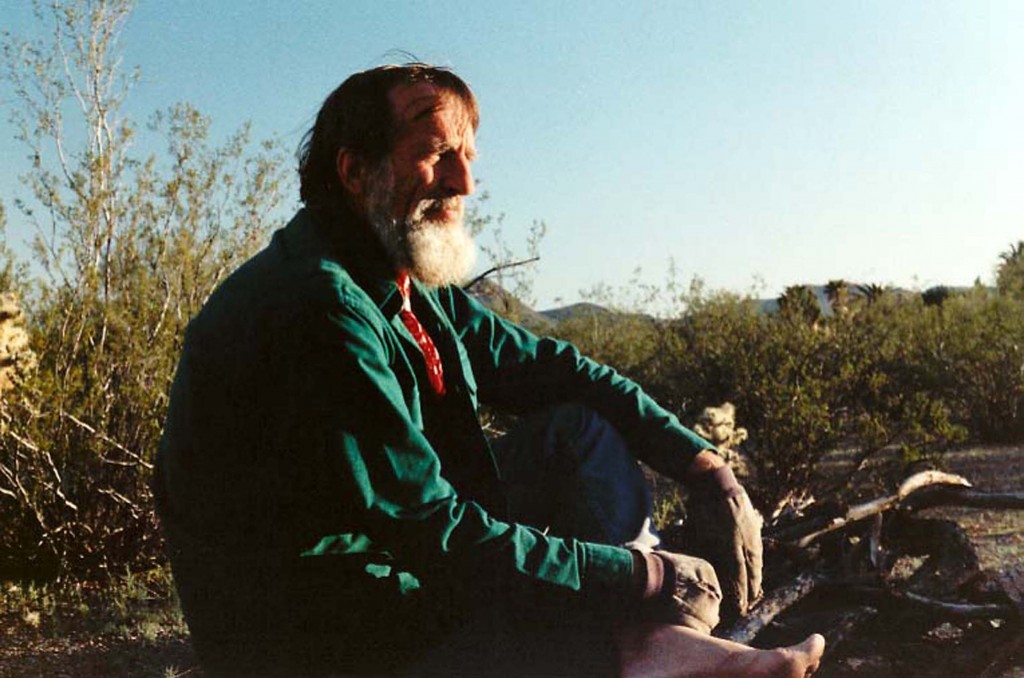
Martin Murie passed away last night. He was 86 years old.  Martin was my dear friend for a quarter century and a loving mentor. He was still standing on corners protesting War and advocating PEACE to the very end. A gentleman in every way…a gentle man….JS

Here is one of my favorite Martin’s Murie stories…
Using the body, all of it, moving, exerting. Not much of that was visible along the highways of this big continent as I urged my faithful 4-cylinder pickup from the north rim of New York state to Wyoming, Colorado, Utah, and back. Highways are where you get a dramatic look at the passive nature of our automaniacal lives, people of all ages touching their digits to the faces of machines to make the machines spit out cokes, pepsis, candy, ice, fuel. We press a lever to get coffee. We slip plastic into slots to pay for things or to open heavy metal doors of Super 8s and the other massive structures of that tribe. We put quarters into slots for the daily dose of “news” print or to make a machine give up a small box of detergent to feed a laundromat top-loader.Rotary phones, remember those? You don’t punch or push, you get to actually move a piece of the machine, several times, to “dial up” the number you want. If it doesn’t deliver you dial Operator.

Quite often machines won’t behave. They go on strike, they sulk. At a mini-mart an enraged voice made me turn from feeding gas into the pickup. An old guy about my age was asking the world, “What the hell am I supposed to do?” I was pleased.  For once I was in a position to deliver digitary advice instead of searching for it.

“You have to press “Pay Inside,” I told the old-timer, and then we were two old-timers telling each other how the old days made more sense. At another stop for gas and coffee I was buffaloed by the gas dispenser that refused to deliver. I gave up, went inside to complain, but the woman behind the counter gave me a big happy smile.

“Let’s go take a look,” she said as she skipped around the corner of the counter and out the door so fast I had to hustle to keep up. I think her vim and joy came from the chance to get away from the touch-and-slide routine, to move, to move fast, to go! At the dispenser she went through the routine I was pretty sure I’d just gone through three times and … the damn machine started pumping gas.

“I did all that,” I said, a bit disgruntled. “Nothing happened.”

She laughed and skipped away, then stopped, turned, said, “You loosened it.”
 

Driving across Nebraska and Wyoming against a headwind, I had lots of time to spin fantasies about the land and the drought and the bad news that my whonky antenna picked up from time to time. Out of that mish-mash of wind and static and random thoughts came, repeatedly, the simple idea that we are, all of us, crazy. We’re forced to adapt to the dumb acts and ideas our “civilization” shoves our way, we have to go a bit haywire, to survive. I mean, how else could we possibly keep going, day after day, while putting up with lies from our leaders, deaths from the wars, Nature making unfriendly returns and millions of us doing nothing about it except hanging out little flags and yellow ribbons and punching machines and hoping they’ll do the right thing, or tapping a code into a cell phone for a chance to talk to another human. Isn’t crazy the word for this?

But my haywire urge right now is to sing the joys of putting ourselves, our bodies into action, doing things. Not on a Nautilus. Not in super athleticism. There’s a difference here: by doing something, I mean making a difference in the outer world. Oh sure, making a difference in our bodies is good, we all ought to exercise and eat right and so on … this is vitally important … but I’m on another track here, looking for changes, out there in the world, changes wrought by human effort.

A little east of Chadron, Nebraska I stopped to renew acquaintance with the Museum of the Fur Trade. It’s on the site of the American Fur Company’s Bordeaux Trading Post, established in 1837. Five dollars entrance fee. On U.S. 20, northwest Nebraska. I went into the back yard of the museum to take a few photos of two sod-roof log structures built into a south-facing slope. I had admired the tenacity of those logs on previous visits and this time the sun was shining brightly at just the right angle, highlighting the dry and thoroughly weathered dove tail notches that had been shaped one hundred and sixty seven years ago.

I was remembering my own dove tail project. It had taken three summers to build our cabin that did double duty as a support for the south end of the ancient woodshed. The first summer was devoted to felling, limbing and barking larch, spruce and fir, then dragging them out of the swamp to a seasoning site. In the next two summers I put the logs together, learning as I went.
 

There was a lot to learn, from the way to hone a good edge on a double-bitted axe to ways of measuring, hewing, levering. I’m in the cabin now, digits on keyboard, looking back to the mistakes I made. Some of the notches are not at all perfect, but some are pretty good and what a pleasure it was, to drop one notched log onto another and see and hear the clunk of true fit. The foundation isn’t perfect either, there has been a little frost-heaving, but now, after a number of winters the cabin seems to have found a solid footing of its own.

U.S. 20 is a good “Blue Highway.” If you’re crossing Nebraska this summer, try it. In Merriman, you might want to drop in at the Sand Café. Weak coffee, good pie. And Karen’s Kitchen in O’Neill is a modest place on the main drag, but has won an international reputation. Conversation, so-so coffee, excellent chocolate cake.

Near Chadron is Fort Robinson, a key cavalry outpost in the nineteenth century. Crazy Horse was killed there. That double-bitted axe! Bought the blade at a farm auction, hung it, sharpened it. The steel took a good edge, not too soft, not too hard. I was bragging about it to my neighbor, an experienced logger.

He said, “You must have got hold of a Black Raven.”

That’s what it was, Black Raven. It comes from the age of wood and steel. We are now in the age of plastic and glop. Is this significant? Sure it is. The consumer nowadays, that’s you and me, is a harried person holding down one or more jobs, striving to keep a household going. We don’t have time to learn hands-on skills. We pour chemicals, put things together with tape, cover errors with stuff out of a tube. Lots of iron still around, but at the “consumer” level it’s apt to be cheap stuff twisted into shape rather than forged or cast, prone to breakage or just too crappy to be of much use.

One summer, returning from walkabout in the west, I found Alison in our (1840s) house, working on a major project.. She had torn out old cracked plaster and split-board lathwork and installed insulation between studs and ceiling joists and was beginning to put up drywall. She had built a pair of wooden supports to hold the heavy 4-by-8 boards against the ceiling while we nailed them. This house was not put together with modern 4-by-8 units in mind; creative cutting of drywall was required.  Alison is a master at imagining, measuring and then executing that kind of work. I’m more a rough carpenter type. But together, we got the job done. Hand-and-body work; a misery and a pleasure.  I call it adventure.

Have you seen the TV ad for a claw on the end of a metal stick that will disturb garden soil, provided that soil is already tilled and sod-free? You don’t have to kneel on the ground, you don’t touch the ground, you have that stick between yourself and the good earth. Maybe the thing works better than I suspect. If you have one, let me know. At any rate, I’m taking the opportunity to hoist this gadget as a powerful symbol: loss of contact. Same with motorized tools. Witness the harried householder in a rush, pushing or riding the howling lawnmower. There was a time when kids had the job of pushing rotary mowers that went clackety clack. The kid had to push hard if the grass was more than a few inches high. Those were big jobs, they took time. The mower wouldn’t move if the kid didn’t heave his entire body into the action.

Ed Abbey had something to say abut this: “Pushing a lawnmower? Pushing? Nobody, nowhere, nobody in all of America, Japan or western Europe pushes a lawn-mower. They ride them, pushing levers, buttons, horns. Or their gardeners do. Their children, maybe, sometimes.” Quoted in Anderson Valley Advertiser, June 9, 2004.  Time and motion were allotted differently in “the old days,” a fact we could have expanded on, we two old ducks at the digitized gas pump.

Materials were different too. Expectations, habits, a whole basket of differences. But when a couple of ancients get to talking about the ways things used to be you might notice that they’re not always revisiting an age when everything was hunky dory. I’ve listened to stories about farm kids learning the innards of tractors, trucks, everything mechanical, in order to dodge the awesome agony of hard physical labor in the fields.

I was lectured once by an oldster whose life had gotten much better in modern times: no more sleeping two kids to a bed, in a cold house, not enough food, not enough clothing, not enough money and too much grinding physical labor. Stories from the past, we need those, to help us figure out who we are. I’m speaking here against the awesome presentness of the present, that vacuum, that absence, that amazing non-remembrance of things past.

The young woman who happily dashed out of the Mini-Mart to wrassle the gas tank; I see now that the past was with her, whether she knew it or not; she and the rest of us come bouncing and squalling out of the tens of thousands of years of the evolving of humankind, the fine-tuning of muscle, sense and mind. Our bodies do remember; our bodies rebel against the couch potato life and the slow hours standing behind counters passively following routines, handing out burgers and taking in and handing out money and plastic cards. Back-breaking overwork, bodies rebel against that too. Ask any farm worker. Does this, now, in the formidable present, make us more uppity?

I hope so. When you put a coin in a slot and signal Diet Coke or Pepsi or Mountain Dew, look carefully at the metal and glass that houses the machines. Oh yes, they’re in there. Listen to them humming to themselves. Think about the grand total of such machines, stationed across the continent and overseas, throbbing, extracting from the earth. Do you ever wonder how long such contrivances will endure. I say, “These too will pass.”

Turning south from I-80, I got rid of the headwind, drove through Baggs,Wyoming and into Colorado. Along the way, somewhere north of Rifle in pitch black night a big buck mule deer. He stood stock still in the headlights, beautiful, for a half second, making a decision. I was doing that too, steering, braking. He bounded off, I drove on. At the next gas stop the machine told me my credit card was invalid. (Machine error, it turned out, later). I counted the cash in my billfold. Decision time. I remember the deer. He and I adapt to high-speed roads where metal creatures come at you with sudden blinding lights, as best we can.

We are fellow mammals on a planet getting stranger all the time. We have to pay attention to what’s new, and make decisions. If we don’t, we die. Life is that way. Yes, but what happened to put us in the now … those old stories, memories … those are with us too, part of the now, important.
 

Posted in Uncategorized.


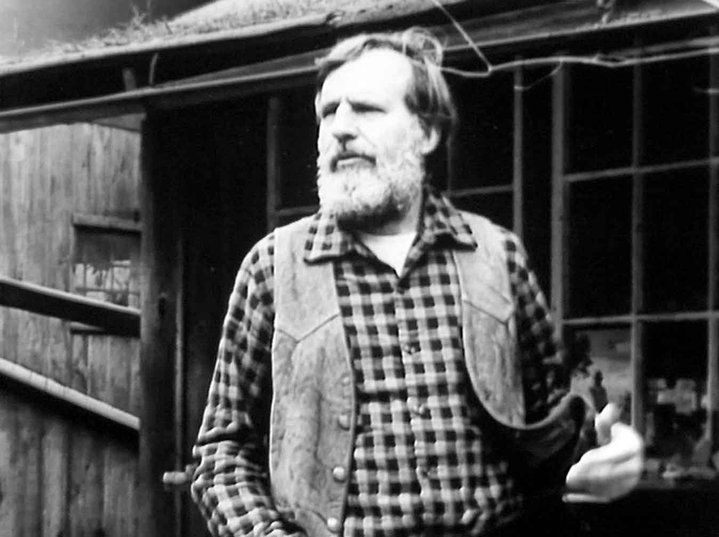
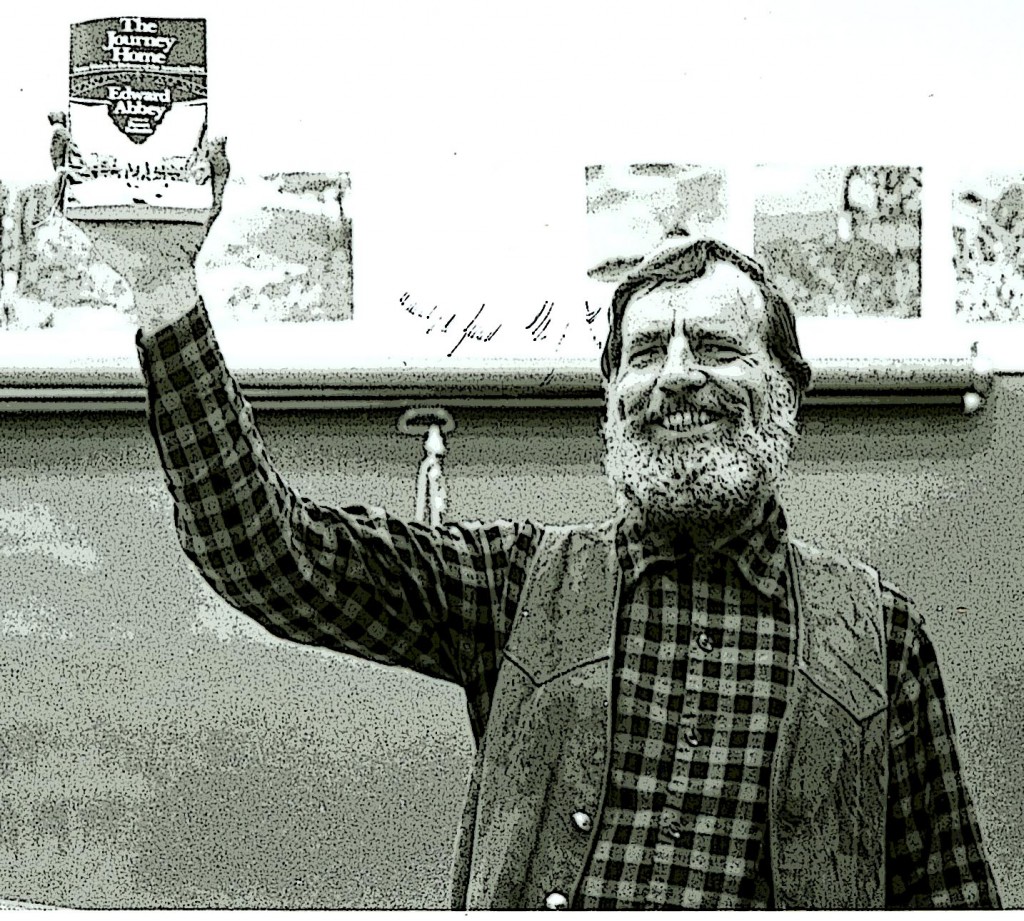
ED ABBEY’S Birthday—-January 29, 1927. He would have been 85 years old today. (An essay by Stiles on Abbey from 1999)

A FEW WORDS OF PRAISE FOR A RELUCTANT HERO  (April 1999)
By Jim Stiles

Edward Abbey changed my life. He saved me from becoming a Republican. Twenty-five years after a friend of my father’s handed me a worn out copy of Desert Solitaire and a decade after his death, Ed Abbey is, to me, an honest hero in a time and a world where we don’t allow heroes. He’d throw a beer bottle at me right now (an empty) if he were here to read these words of praise. But think about it Abbey, if it weren’t for you I might be gearing up for the Quayle Campaign. What else can I say?


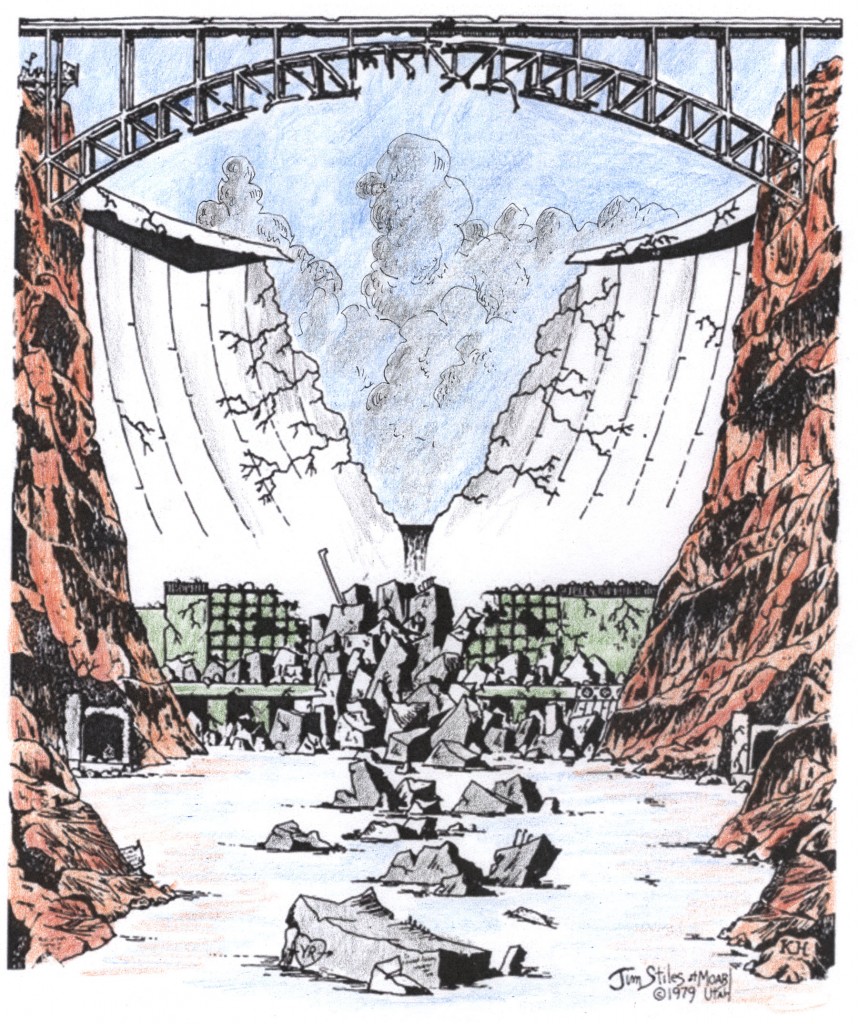
I still remember the first time I met Ed. I’d read Desert Solitaire a few years earlier and had abandoned my family’s perverse dedication to Richard Nixon and the GOP. Now I was an Abbey Groupster, one of those annoying young Eco/Abbey Freaks who drove a VW microbus covered with inflammatory bumper stickers. I always carried a copy of The Book in my hip pocket. I had come West from Kentucky to live in Moab, Utah and I had come to give Abbey a present. Carefully rolled up in a cardboard tube was a drawing of mine, a cartoon extravaganza of Glen Canyon Dam blown to smithereens.

I wanted to give my pen and ink doodle to my favorite author and had read on the jacket cover of The Monkey Wrench Gang that Abbey lived in a remote little corner of the southwest called Wolf Hole, Arizona. After long hours eyeballing road maps, I found Wolf Hole, a tiny speck on the Arizona Strip, south of St. George, Utah and north of the Grand Canyon. So I made the long pilgrimage over rough and corrugated dirt roads to Wolf Hole.


 

There was nothing there.

Not even a fence post. If Abbey was out here, I decided, he had concealed himself far better than my tracking skills were at finding him. I abandoned my quest, but months later I found myself back in Moab, recently hired as a $3/day volunteer at Arches, and discovered that Abbey lived just outside of town. A mutual Park Service friend introduced me to Ed at a poker game and I finally gave him the Glen Canyon Dam(n) cartoon. He was as gracious and kind as I could have hoped. “It’s Floyd Dominy Falls!” he said. But when I told him I’d gone all the way to Wolf Hole to give Ed the drawing, Abbey’s grin broadened…

“Yes…Wolf Hole,” he chuckled. “What’s it like down there?”

It was the beginning of a friendship that would last until his death in March 1989. As I got to know Abbey over the years, I only came to admire him more, in spite of, or perhaps even because of his faults and contradictions. Abbey reveled in confusing his adversaries and followers alike. He was contradictory but he was so damn honest about it. He was once expounding on population control and the young feminist interviewer thought she had Ed dead center in her cross hairs.

“But Mr. Abbey, don’t you have five children of your own?” she asked scornfully.

You could see Ed’s eyes grow brighter. “Yes I do,” he answered with a hint of pure joy, “But they’re by five wives. That’s only one per wife.”

No one saw more clearly than Abbey what we as a species need to do to keep this planet of ours from sinking into a sea of sludge. But Ed never claimed to be the vision of perfection himself. He detested the various crowns and titles we all attempted to bestow upon him. “I’m not a guru,” he often groused, “and I’m not an ‘environmental leader.’ I just like to throw words around.”

No one threw words better. He lit fires under people. Before Abbey, writers who came to the defense of Planet Earth, like John Muir and Henry Thoreau, spoke with gentle voices. Their message was clear but it was lyrical. And then along came Abbey with a clenched fist and a heart full of anger.

He said: This is our land. It’s all we have. It’s being ripped to pieces before our very eyes. And I’m not going to just sit here and lament its passing. I’m mad. What about you?

It was that kind of passion that ignited so many of us and I’d like to think that Abbey’s life and his impact made a difference in the West. I still live in Moab after all these years and recently someone asked me how Moab and the canyon country would be different had Abbey never lived. I thought about that for a minute…

On the one hand, even here in the deadfromtheneckup state of Utah (yes, that’s one word in the Beehive State), setting aside wilderness is a concept that most of its residents believe is vital to our future and an effort that we should be proud to pursue. Someday, perhaps not in my lifetime, the Utah congressional delegation will finally introduce a decent wilderness bill.


Nearby Canyonlands National Park was once destined to become another windshield tourist playground with paved roads and scenic loops and huge industrial-strength campgrounds and hotels and snack bars. But it didn’t happen, at least not on the scale promised when the park was created in 1964.

Ed Abbey’s hand can be seen in all this. Abbey always ran a decade or two ahead of the curve, and most Americans have come to appreciate and embrace the ideas he first proposed thirty and forty years ago.

On the other hand, I look through cringing eyes at Moab, Utah in 1999, at the ever-growing assortment of fast food restaurants, and pre-fab motels along Main Street and fake adobe condos that keep consuming the alfalfa fields and horse pastures, and the hordes of adrenalin junkies who swarm over these precious rocks looking for cheap thrills, and I say to myself: Not enough people have read Desert Solitaire.


And again if Abbey were here, he’d shake his head, squeeze my shoulder and say, “Never mind all that. Our only hope is catastrophe anyway. Get out those cigars you brought and let’s go for a ride.”

He was so damn proud of that last car. It was a 1972 red Cadillac convertible. It got eight miles to the gallon.


THE DEC/JAN ISSUE:

Posted in Uncategorized.


STILES’ ROAD RULES #3 (“Throttling Back!!!) From the 2005 archives

STILES’ ROAD RULES #3   “Throttling Back”  (from the archives 2005)

I wrote this a few years ago, but with recent news stories predicting another dramatic rise in gas prices this summer, here again are some helpful hints to increase your fuel economy…JS

These are difficult times for people like me. I love to drive. Nothing soothes me more than a long empty stretch of road and a full tank of gas and no known destination. While I loathe the crowded freeway, finding that deserted highway is something I always long for and often seek. I love the rumble of the road. I love spotting a little café in a town I never knew existed until the moment I drove into it and stopping for pie and coffee and listening to locals talk about last Friday’s high school football game and the price of cattle. I love hearing the singing meadowlarks as I slowly rattle by their perches on fence posts and power lines. I like to roll down my window and moo at the standing cattle and wonder if “bovolexia,” the irresistible urge to moo at cows in a field is really an affliction that will someday produce its own special medication. I love driving into a thunderstorm and listening to the rhythm of my wipers.


I know it’s wrong to admit I love to drive and I know I cannot begin to justify my addiction, but there it is, for all of you eco-purists out there, who want to call me a hypocrite.

I am guilty as charged.

Now with the price of gasoline stuck in the vicinity of $3, double what it was a year or so ago, and knowing that to wish the price would fall dramatically runs counter to my broader view of energy consumption in America, I am wracked with guilt and indecision. I knew I had to do something.

First I gave up my beloved Zephyr transportation fleet vehicle for anything but the absolutely necessary journeys. My 1986 GMC pickup which sports 226,000 miles on the odometer and which has faithfully hauled Zephyrs from printer to public for more than a decade, slurps up gasoline faster than an elephant eats peanuts. It might get 15 mpg on a good day, moving mostly downhill, which means I can hope for about 180 miles on $35 of fuel. It now costs about $170 in gas, just to drive to Tooele for a press run.

So I’ve forced myself to moth ball the Brown Bomber, firing it up only to keep the battery charged and the fluids circulating and to get the Z printed. I rely on my 1999 Subaru Forester on a daily basis and although I’ve never really developed the personal bond with this vehicle that I’ve experienced with other cars in my automotive past, I can say nothing but good things about her performance and efficiency. It always starts, has never broken down (knock on my pointy head) and even at above freeway speeds manages to get 30 miles per gallon.


But I knew the Subaru and I could do better and I knew it would require a sacrifice on my part. In previous editions of “Stiles’ Road Rules,” I offered nothing but scorn and contempt for those of you who fail to maintain the posted speed limit. My motto has always been, “Stay with the Traffic Flow or Get the Hell Out of MY Way.” I could move from tranquility to road rage faster than you can say, “slow moving Winnebago,” and some of my friends, experiencing my rage for the first time seriously suggested counseling.

Economic necessity and a nagging and annoying need to “do the right thing” changed all that. I slowed down.

If you’re under 40 years old, you probably don’t remember that in 1973, President Nixon ordered a reduction in speed limits on all federal highways to 55 mph as a means of conserving energy. For a country accustomed to speed, the double nickel national speed limit caused severe shock to the motoring public and required a major readjustment. Imagine driving across the Cisco Desert from Green River to Grand Junction at 55 mph…it was excruciating at first. It had never occurred to most Americans that driving at a slower speed had anything to do with fuel economy. When Nixon first announced the speed limit reduction, I was skeptical and decided to put his proposal to the test. So I drove from Louisville to Cincinnati one weekend to visit my parents and scrupulously monitored my speed both ways. I became a believer when my gas mileage improved by 15%.

Still the national speed limit was opposed by many Americans, particularly the trucking industry. In 1987, lobbyists convinced Congress to raise the speed limit on rural interstate freeways to 65 mph, but it wasn’t until 1995, 21 years after its inception, that the 55 mph speed limit was finally abolished by Congress.


Now in 2005, I have imposed my own national speed limit upon myself. I keep my speed under 60 on two lane roads and under 65 mph on the interstates. I try not to make a nuisance of myself by creating logjams for faster moving vehicles. If there’s no opportunity for cars and trucks to pass, I’ll pull over and let them go by, but if timid drivers who lack passing skills miss clear opportunities to get by me, they’re going to save fuel whether they like it or not.

Keep in mind that I live in the Rural West and don’t fight heavy freeway traffic on a daily basis, where trying to drive at 55 is a suicidal gesture. But out here, when the road is relatively empty and I know my vehicle’s capabilities and my own driving skills, I’ve even begun coasting on the long grades. Did you know that northbound between Monticello and Moab, you can coast for nine miles? That’s over 15% of the 54 mile journey.(I’m sure I’ll get calls from the Utah Highway Patrol on this one, so please don’t try it yourself.)

The bottom line for all my energy saving efforts has been an increase in my fuel economy from 30 mpg to 36 mpg or a 20% improvement. On a 15 gallon tank, that means I travel 90 miles farther than I did before. That’s like a free trip to Grand Jct. (if not back again).

Beyond that, I feel calmer. With some notable exceptions (those damn mega-motorhomes!), my road rage has gone into hibernation. Life seems just a little bit easier to cope with, now that I’ve removed myself from the fast lane.

And I have more time to moo at the cows.

The Dec/Jan Issue is online (click the cover)

AND the Feb/Mar Zephyr will be posted on Feb 1

Posted in Uncategorized.


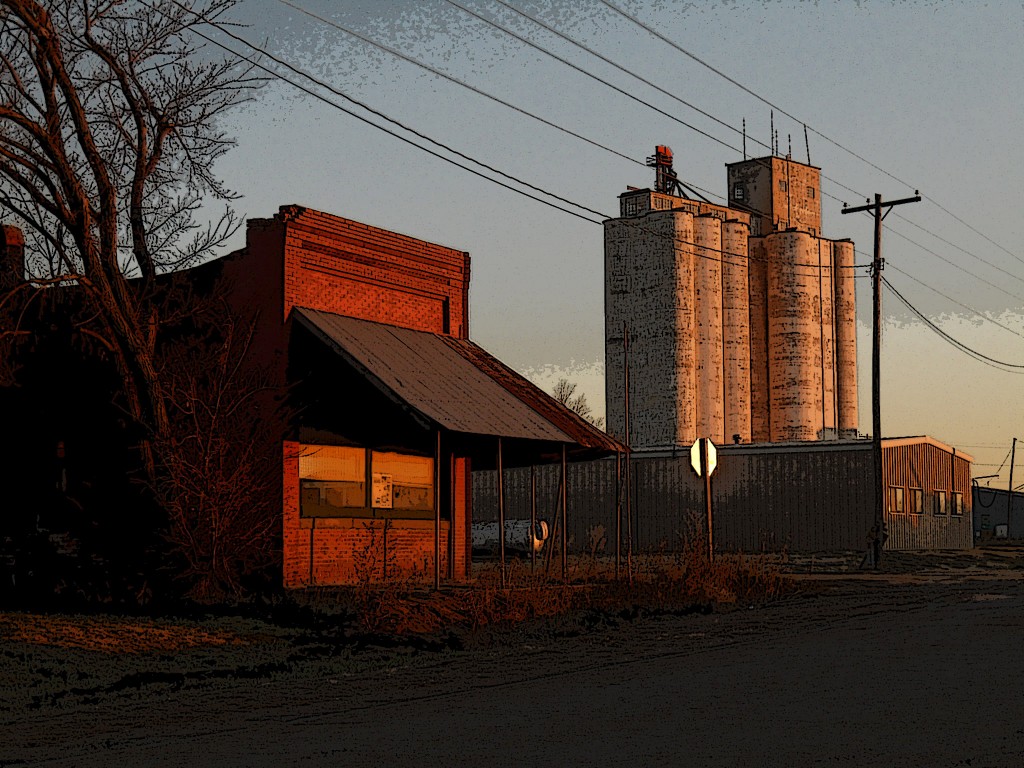
Poking Through the Ruins #15: ‘Sunset at Penalosa’

Posted in Uncategorized.


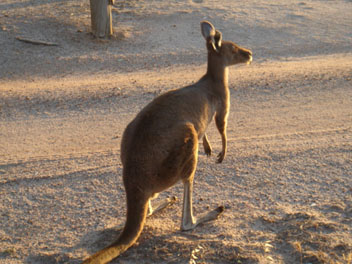
‘ZOE’ The Human Kangaroo of Halsham Farm

AUSSIE FLASHBACKS #1….(From The Zephyr Archives…Feb/Mar 2009)
I’d heard about Zoe, but until I met her, I thought my buddy Greg was just pulling my leg. After all, “taking the piss” out of Yanks is an Aussie pastime.

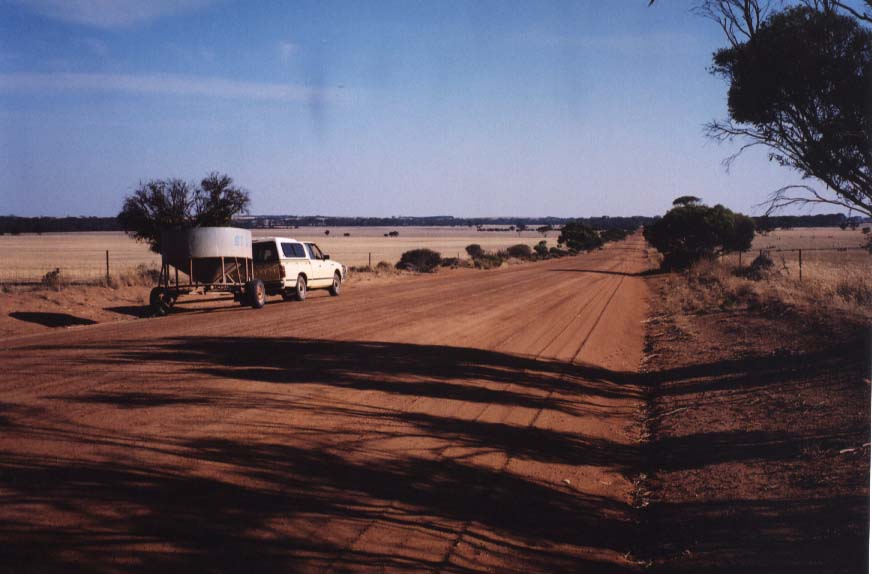
Several years ago, I met Greg Fewson, a farmer from Western Australia, who lived as far out on the edge of the wheatbelt as anyone can, and still have any hope of finding enough rain to make something grow. The Fewson Family created Halsham Farm almost a century ago, and through good times and bad, they have persevered.

Greg grows wheat and raises sheep on several thousand acres that he rotates from year to year—sheep shit is excellent fertilizer for winter wheat. So the sheep and the wheat have a symbiotic relationship. Scattered across the vast Aussie landscape are, of course, the creatures for which Australia is best known. The ubiquitous kangaroos.

On our first drive to Halsham, 85 kms east of Katanning, Greg told me about Zoe.

Zoe the joey.

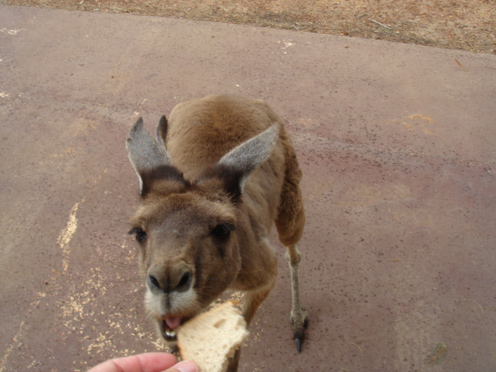
She had simply shown up one day and decided to stay; Zoe adopted the Fewson family. I could scarcely believe what Greg was telling me but she was so comfortable at Halsham Farm that she often came inside the house and stretched out on the couch in the lounge room—just one of the kids—her enormous hind legs and thick tail dangling over the far end of the sofa. At night she’d even sleep on the bed between Greg and his wife. And she loved whole wheat bread.
As Zoe grew, however, her visits became less frequent and one day, she left and didn’t come back.
Greg figured she’d found a mate and they’d never see her again. It was a logical assumption.

But two years later, in the middle of the night, and in the middle of nowhere—Halsham is miles from the nearest town—Greg was awakened by the sound of the sliding screen door in the lounge room. Before he could crawl out of bed and confront the intruder, he heard a hard thump on the mattress between him and his wife. He reached for the light switch.

It was Zoe.

Now full-grown but apparently unaware of it, Zoe had returned, even managing to unlatch the screen door in the process. She’d come to say hello, not to move back in. The next day she was gone again and sometimes Greg would go years without seeing her. She took a mate and produced a few joeys of her own, but managed to stay in the area.


Greg moved out of the house at Halsham and restored the old homestead, 20 kilometers north. The Halsham home sat empty for a few years until Greg heard I was looking for a place to settle for a few weeks. Gracious as always, he offered me the Halsham house…

“Everything’s turned on, Jim. Make yourself at home.”

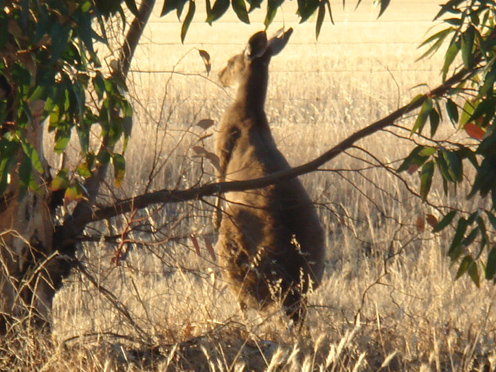
A couple days later, I was hanging laundry on the clothes line in 100 degree heat when I saw something emerge from an old tattered and long abandoned trampoline, next to the house. I turned to see the blur of a roo coming right at me.

Scared me to death.

And then I thought….Zoe?

I spoke her name and she took two more hops and  turned her head just so, to allow maximum ear scratchability. She almost moaned like a dog.

I finally came back inside and Zoe slept in the shade. That evening I went for a walk along the fence line. Though I’m not a runner by nature, I decided to pick up the pace a bit, only to find Zoe hopping effortlessly beside me on the far side of the fence. The damn roo wasn’t even breaking a sweat.

Aggravated by my pace, she sped ahead and waited for me at the house. When I arrived, panting, a few minutes later, Zoe was lounging on the front porch. I knew what she really wanted. A few moments later, the Roo of Halsham Farm was taking whole wheat bread right out of my hand.

“Only two pieces, Zoe,” I said, “or you’ll bloat.”


That was two years ago. Greg figured then she must be close to 15 and kangaroos in the wild rarely live past 18. But what a life she’s lived—running free in the golden light of Western Australia, and never quite sure if she was a roo or one of us. Or both. I think she lives the best of both worlds.

The Dec/Jan Zephyr (click the cover)

Posted in Uncategorized.


POKING THROUGH THE RUINS #8 Simon & Garfunkle..January 1968

http://www.youtube.com/watch?v=mMhkD0NRLtU&list=FLvaUWGCUhNweiGt7dMRdu2A&index=10&feature=plpp_video

Posted in Uncategorized.

Tagged with .


(from Basin & Range Watch) NIGHTMARE SOLAR PROJECT GETS OK FROM MAINSTREAM GREENS

AN EXCERPT:  ‘Now why would the Wilderness Society, Defenders of Wildlife, the Nevada Wilderness Project, the Sierra Club and a host of other Nevada enviros support such a thing when the environmentally friendly alternative is staring them right in the face??? We never have seen such a willful ignorance towards protecting habitat and public lands by the environmental community.’
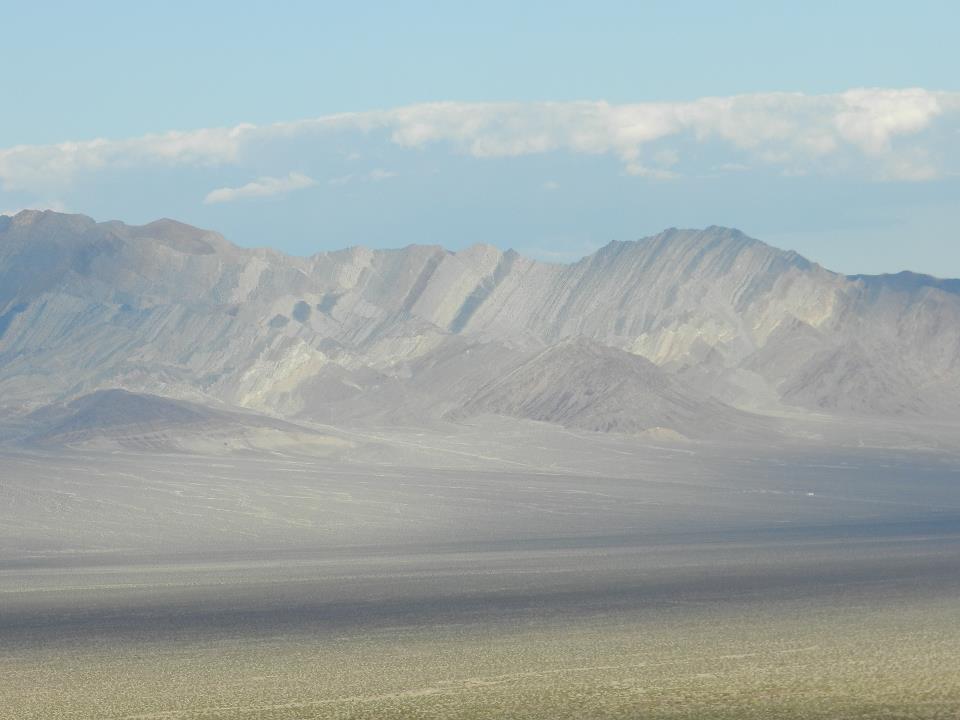
THE FULL TEXT FROM B&RW:  Looking east towards the 8,000 acre Amargosa Valley Solar Energy Study Zone that the Interior Department has deemed as an appropriate development to the Amargosa Valley, Nevada. The Solar Final Programmatic Environmental Impact Statement for Solar Energy Development in Six Southwestern States http://solareis.anl.gov/news/index.cfm#fpeis will be released tomorrow with a 30 day protest period. The Amargosa Solar Study Zone will be highly visible. Hundreds to thousands of acre feet of water would be needed to control the dust from scraping up 12 square miles. The community of Amargosa Valley banned an off road race due to the fact that the dust was getting very bad. While the environmental community supported the OHV ban, none of them are saying too much about the solar energy zone. Past nuclear tests on the adjacent Nevada test Site have contaminated the soils. Radon levels are three time the national average. Creating a dust bowl will create health problems. The Solar Energy Zone will be visible from the Death Valley National Park Wilderness. The area supports a genetically unique desert tortoise population. There is also no transmission up there and building a new line would destroy even more public land. Twelve square miles of desert will only produce about 700 MW of energy while Australia just installed 1.7 GW of rooftop solar energy. Now why would the Wilderness Society, Defenders of Wildlife, the Nevada Wilderness Project, the Sierra Club and a host of other Nevada enviros support such a thing when the environmentally friendly alternative is staring them right in the face??? We never have seen such a willful ignorance towards protecting habitat and public lands by the environmental community. Think about it, they are supporting the “all of the above:” energy policy. How will that help climate change when the same Interior Department wants to develop fossil fuel right next to the solar farms?

TO VISIT BASIN & RANGE WATCH’S WEB SITE CLICK THE IMAGE

Posted in Uncategorized.